REVIEW · YEREVAN
Private Tour to Garni Temple, Geghard Monastery, Echmiadzin Cathedral, Zvartnots
Book on Viator →Operated by Jan Armenia Tours · Bookable on Viator
Seven hours, four UNESCO sites, one clean plan. You’ll bounce between pagan ruins, cave monasteries, and early Christian centers, with the day’s best views of Mount Ararat timed in. It’s a fast way to read Armenian history in the places where it actually happened.
Two things I like a lot: the comfort and convenience of hotel pickup/drop-off in an air-conditioned car with WiFi, and the option to upgrade to an English or Russian-speaking guide (for example, Arev was praised for clear, history-focused explanations). One drawback to plan for: you’ll likely pay some entry fees yourself, and lunch is not included.
In This Review
- Key highlights to know before you go
- A Full-Day Private Circuit from Yerevan (and why it works)
- Charents Arch: Your short stop for the best Ararat moment
- Garni Temple: Roman-era stones and a clear UNESCO payoff
- Geghard Monastery: Where the monastery is inside the cave
- Etchmiadzin Cathedral: The Armenian church heartland in one visit
- St. Hripsime and St. Gayane: Two churches with UNESCO links
- St. Hripsime Church
- St. Gayane Church
- Zvartnots: Ruins that still teach scale and engineering
- Price and value: what you’re really paying for
- Pacing, photos, and the one small planning move that helps
- Who should book this tour (and who should rethink it)
- Should you book? A quick, honest decision guide
- FAQ
- What is the duration of the private tour to Garni, Geghard, Etchmiadzin, and Zvartnots?
- Does the tour include hotel pickup and drop-off?
- Is there an English-speaking guide available?
- Are entrance fees included?
- Is lunch included in the price?
- Can I cancel for a full refund?
Key highlights to know before you go
- A tight heritage route: Garni, Geghard, Etchmiadzin, and Zvartnots in one day from Yerevan
- Ararat views built into the schedule at Charents Arch, with time to actually look
- Cave monastery time at Geghard, including the sacred spring story inside the rock
- Historic Christian landmarks at Etchmiadzin plus St. Hripsime and St. Gayane churches
- Ruins that still feel huge at Zvartnots, with a museum and reconstruction models
- Private means flexible pacing, and you can customize to your interests
A Full-Day Private Circuit from Yerevan (and why it works)
This is one of those day trips that’s ambitious on paper, but practical in real life. You start and end in Yerevan with hotel pickup and drop-off, then spend about 7 hours visiting major heritage sites packed along the way. The big advantage for you: you avoid the hassle of figuring out transport, timing, and which sites really matter.
The vehicle details are worth noting because they change how you feel at hour five. You’re riding in an air-conditioned car with WiFi on board, and you get bottled water. That sounds basic, but on a day with multiple stops, it’s the difference between sightseeing and being worn out before you get your best photos.
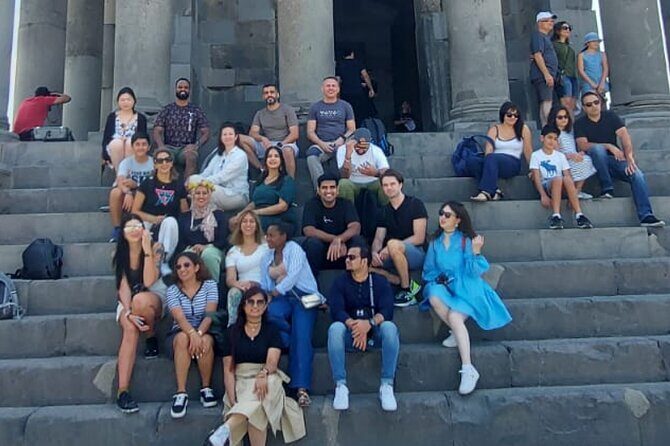
Another reason this tour fits well: it’s private and up to 3 people per group, so you don’t have to share your day with strangers. And if you want more context, you can upgrade to an English or Russian-speaking guide. One review specifically praised a guide named Arev for being friendly and well-versed, and another highlighted driver David for keeping things moving smoothly.
The schedule is also designed around variety. You’re not just doing churches. You get a pagan temple stop, a cave monastery, a major cathedral complex, and then classical-era temple ruins. That mix helps you understand how Armenian identity shifts across centuries—without needing to read a textbook first.
Other Garni and Geghard tours we have reviewed in Yerevan

Charents Arch: Your short stop for the best Ararat moment
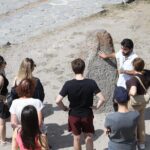
Charents Arch is close enough to Yerevan to keep the day efficient, but it still feels like a real viewpoint stop. You’ll spend about 30 minutes here, and entry is free.
At first glance, Charents Arch can look like a simple rock formation. The trick is where the viewing experience happens. You get a chance to go onto the platform inside the arch and look out over the broader view. From there, Mount Ararat becomes the star of the show—less a distant detail and more like a presence in your photos.
If you care about images, this is one of the most “worth the stop” moments in the whole day. Even if you don’t chase scenic viewpoints, it’s a quick reset before you move into the heavier history stops like Garni and Geghard.
Practical tip: treat Charents Arch as a photo-and-breathe stop. Don’t sprint through it. The best views need a minute to soak in.
Garni Temple: Roman-era stones and a clear UNESCO payoff
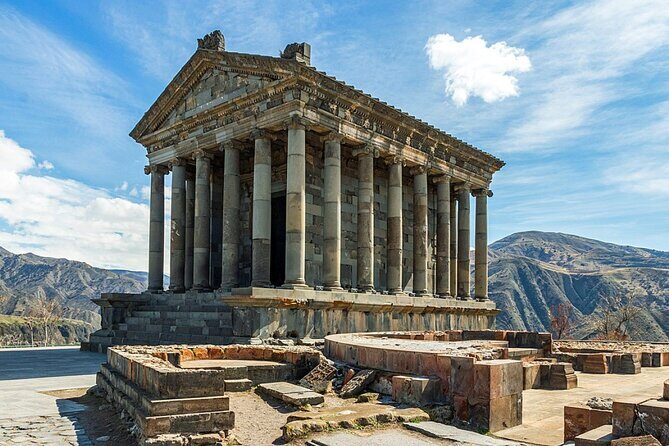
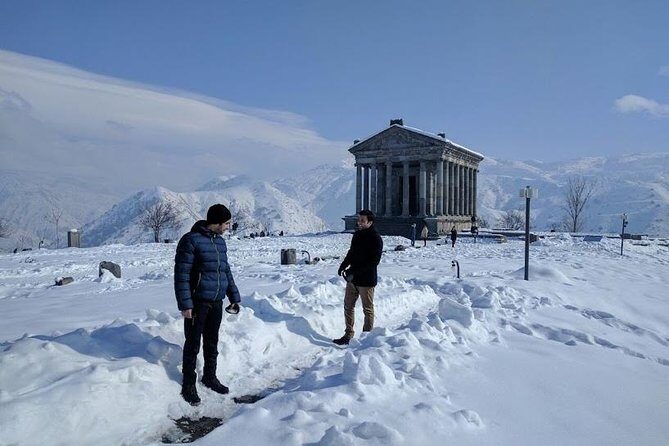
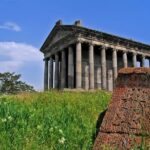
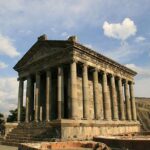
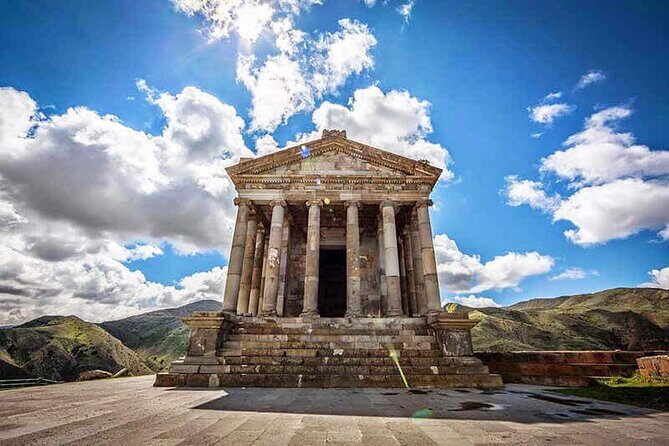
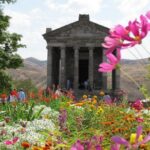
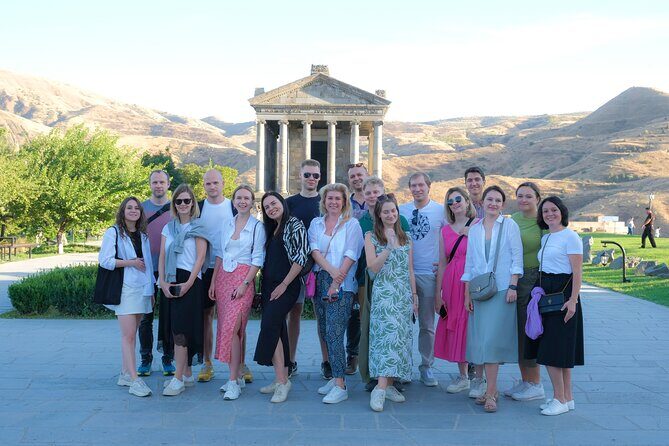
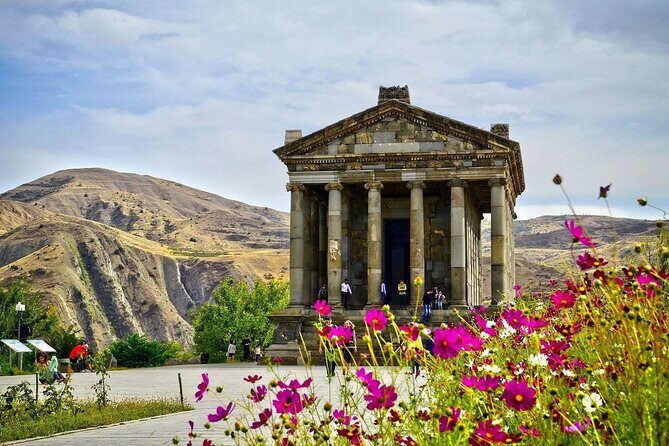
Garni Temple is the one pagan site that has survived in Armenia, built in the second half of the 1st century by King Trdat III. You’ll spend about 1 hour here, and admission is not included.
The reason Garni matters on this route is simple: it’s the day’s anchor point for Armenia before Christianity took over public life. After Armenia adopted Christianity, the temple area became a summer residence connected to Khosrovadukht, sister of Trdat III. It was later destroyed by an earthquake in 1679, which is why what you see today is fragments, columns, and stonework that survived when much else didn’t.
Garni is also tied to religious interpretation. The temple is often associated with Mithra, the sun god. That’s exactly the kind of detail a good guide can explain with context, because it helps you understand what you’re looking at—rather than just admiring the ruins.
The UNESCO value here is that Garni isn’t just a random old building. It’s a rare survivor, and the setting makes it feel like a “real place,” not a museum exhibit. You’re also in the right mood for the transition that comes next: Geghard’s cave monastery.
One consideration: because the entry fee isn’t included, budget a bit for Garni when you plan your total day costs. If you skip those details, you may feel surprised at the ticket counter.
Geghard Monastery: Where the monastery is inside the cave
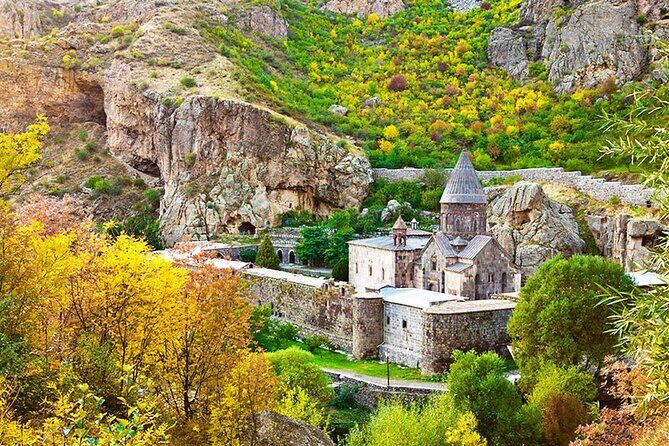
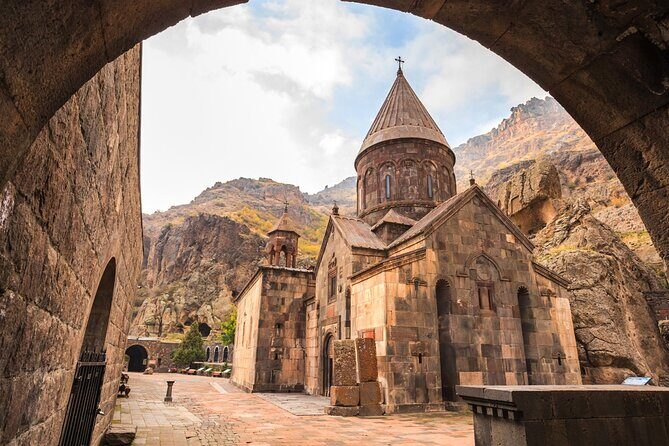
Geghard Monastery is the stop that tends to feel most special in person, and it’s one of the most practical too. It’s about 1 hour, and entry is free.
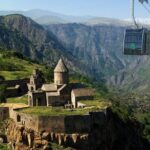
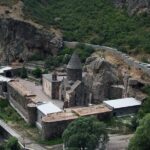
Geghard is a “cave monastery,” meaning the complex is hollowed out in rock. The monastery was founded in the 4th century AD at a sacred spring that begins in the cave. That’s a big deal for how the site works emotionally: you’re not just visiting ancient architecture; you’re seeing a religious place built around a spiritual source.
The name Geghard means spear, connected with the Langin’n spear story tied to Jesus. One helpful detail is that this spear is said to be kept in the museum of Etchmiadzin, which gives you a reason to care about that later cathedral stop. It turns the day into a linked story instead of a list of monuments.
What you’ll likely appreciate most: the experience of walking through spaces where the rock itself shapes the atmosphere. Cave architecture has a way of cooling down the pace of your thoughts. Even if you’re not a religious traveler, it’s architecture with purpose.
If you want a simple rule: take your time at Geghard’s main cave sections. This is not the stop for a hurried photo run.
Etchmiadzin Cathedral: The Armenian church heartland in one visit
Etchmiadzin is a big step up in meaning on this itinerary, and it’s also structured to help you understand the whole religious ecosystem, not just one building. The cathedral complex stop is about 1 hour, and admission is free—but the Treasury Museum has an extra fee.
The cathedral itself is presented as Armenia’s first Christian cathedral site, founded in the IV century BC in the tradition of Etchmiadzin’s meaning as place of the descent of the Only Begotten. One distinctive feature you’ll notice is that there isn’t only one main altar. There’s also another altar in the middle, marking the site of Christ’s descent.
If you like details, the Treasury Museum is the part you don’t want to skip, assuming you’re okay paying the entrance fee. It holds relics and church clothing embroidered with gold and pearls, plus catholicos’ staffs and crosses and ritual objects made of gold, silver, and ivory. Even if you’re not studying church artifacts, seeing the scale of the collections gives you a reality check on the wealth of material culture tied to Armenian Christianity.
You’ll also see the residence area of the Armenian patriarch—the Catholicos of all Armenians—which helps explain why this is more than sightseeing. It’s a living center.
Finally, keep an eye out for cross-stones, including Amenaprakich (1279) and one dedicated to the victims of the 1915 genocide. If you’re the kind of traveler who wants context rather than only stone-and-spices, these memorial elements matter.
Tradeoff: because the Treasury Museum is not included, you’ll need to decide whether you want to spend extra time (and money) there. If you do, it’s the most “artifact-focused” part of the day.
Other Echmiadzin and Zvartnots tours we have reviewed in Yerevan

St. Hripsime and St. Gayane: Two churches with UNESCO links
After Etchmiadzin, the itinerary turns to two church stops that are shorter but meaningful: St. Hripsime Church (about 30 minutes) and St. Gayane Church (about 30 minutes). Both have free admission.
St. Hripsime Church
St. Hripsime was founded in the 7th century by Catholicos Komitas I Aghtsetsi at the place of Saint Hripsime’s sepulcher. This church is included in UNESCO World Heritage List since 2000.
You also get a human scale detail: two prominent catholicoses—Astvatsatur (1715–1725) and Garaped II Oolnetzi (1725–1729)—are buried in the courtyard. Even if you don’t spend long here, those burial references give you a sense of continuity: this is a sacred landscape maintained across generations.
St. Gayane Church
St. Gayane dates to the 7th century and was built on the site of a 4th century chapel. Relics connected with Saint Gayane are kept in the southern wall of the temple near the altar niche. The church also preserves 17th-century murals above the western entrance focused on the birth of Christ.
This stop also includes a detail that’s unusual in mainstream travel guides: near the temple there is a room linked to the rite called matah from the time of St. Gregory the Illuminator. The description includes animal sacrifice and stabbing, framed as a rite customary for occasions like weddings or a child’s birth. Whether you’re comfortable with that topic or not, it’s a reminder that religion here includes ritual practices, not just buildings.
Practical note: since both churches are short stops, be ready to use your time efficiently—look first, then ask questions if you’ve upgraded to a guide.
Zvartnots: Ruins that still teach scale and engineering
Zvartnots is the day’s dramatic ending, and it’s a bit different from the other stops because you’re mostly experiencing a site with ruins plus a museum. It takes about 1 hour, and admission is not included.
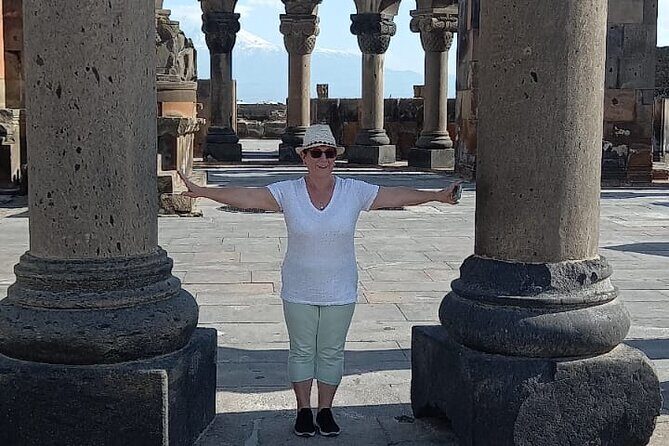
Zvartnots Temple was built in the 7th century for 20 years, described as the Temple of Vigil Forces. It was destroyed by a powerful earthquake in the 20th century, leaving ruins. Even in fragments, the scale of what once stood here is still obvious—enough that you’re likely to pause more than you expected.
Today, Zvartnots is an archaeological reserve and museum founded in 1937. One practical value of the museum: you can see model reconstructions of the temple and view sculptural fragments in a way that helps your brain connect the dots. This is where a lot of first-time visitors get their best understanding, because ruins alone can be hard to read.
It’s also UNESCO World Heritage, matching the rest of the day’s big international heritage status.
Consideration: since the entry fee is not included, plan for it so the final stop doesn’t feel like a surprise cost.
Price and value: what you’re really paying for
The listed price is $105 per group (up to 3 people) for about 7 hours. That makes the cost model simple: the more people you share with, the lower it becomes per person.
If you fill the group with three people, you’re closer to about $35 per person. If it’s just two, it’s higher per person, but you’re still paying for private transport, pickup/drop-off, and a tight schedule that hits the must-see monuments without you piecing it together yourself.
What’s included is genuinely useful: hotel pickup and drop-off, private transportation in an air-conditioned vehicle, WiFi on board, bottled water, and a mobile ticket. The tour is also offered in English, with an optional upgrade for an English or Russian-speaking guide.
What you should expect to pay extra for:
- Lunch (not included)
- Garni Temple admission (not included)
- Zvartnots admission (not included)
- Etchmiadzin Treasury Museum admission (not included)
- A related paid option near Garni mentioned as the Symphony of the Stones (not included)
In practice, the cost works best if you’re the type of traveler who wants structure, comfort, and someone to keep the day organized. If you already have a rental car and love driving yourself, you might pay less. But if you’d rather spend energy looking and asking questions, this private format tends to feel worth it.
Also watch your expectations about guidance: the guide upgrade is optional. Some groups may have driver support only, still getting oriented at key points. If you want deeper story explanations, it’s worth budgeting for the guide upgrade.
Pacing, photos, and the one small planning move that helps
This itinerary is busy, and that’s part of its appeal. You’ll move through multiple “big ticket” places with short blocks of time—30 minutes at Charents Arch and the two churches, then 1 hour at Garni, Geghard, Etchmiadzin, and Zvartnots.
The practical key for you: wear shoes you can handle for walking through historical sites. Some of the surfaces can be uneven, especially near ancient structures and monastery grounds.
For photos, the tour gives you built-in moments:
- Charents Arch for the Ararat view
- Garni for the tall columns and classical lines
- Geghard for rock-cut spaces
- Zvartnots for ruins and reconstruction models
If you’re trying to manage your day, do this one thing: bring a light layer. Even in good weather, church and cave sites can feel cooler than the car.
And yes, lunch can be worked in around Garni. One review specifically called out a good lunch stop at Garni, which tells me the schedule often leaves time for food without chopping the sightseeing too hard.
Who should book this tour (and who should rethink it)
This tour is a great fit if you want a single-day highlight reel of Armenia’s most important heritage sites around Yerevan, especially if your priorities are:
- Christianity’s early centers and Armenian church sites
- pre-Christian architecture with Garni Temple
- cave monasteries at Geghard
- UNESCO ruins and reconstruction context at Zvartnots
It also suits you if you like planning done for you. Private pickup, a professional driver, AC, and WiFi mean you can focus on the places instead of logistics.
It may not fit as well if you prefer very slow travel, long museum time, or minimal switching between locations. The day is packed by design. You can still enjoy it, but you’ll feel the “full tour” pace.
Should you book? A quick, honest decision guide
Yes, you should book this private day tour if you want to cover Garni, Geghard, Etchmiadzin, and Zvartnots in one organized shot, and you value comfortable transport plus the option of a guide upgrade. The route makes it easier to connect the big themes—pagan origins, Christian transformation, and the way earthquakes and centuries shape what survives.
Skip it or adjust your expectations if you dislike entry fees at major sites, hate tight timing, or want a deeper museum day at Etchmiadzin’s Treasury Museum. In that case, you might prefer a longer multi-day plan.
If you’re aiming for an efficient, high-impact day from Yerevan, this one is a solid choice.
FAQ
What is the duration of the private tour to Garni, Geghard, Etchmiadzin, and Zvartnots?
The tour lasts about 7 hours.
Does the tour include hotel pickup and drop-off?
Yes. Pickup is offered from your hotel, apartment, or hostel, and you’ll also get drop-off.
Is there an English-speaking guide available?
The tour is offered in English, and an English or Russian-speaking guide service is optional as an upgrade.
Are entrance fees included?
Some sites are free, such as Charents Arch, Geghard Monastery, Etchmiadzin, St. Hripsime, and St. Gayane. Entrance fees are not included for Garni Temple, Zvartnots, and the Etchmiadzin Treasury Museum.
Is lunch included in the price?
No, lunch is not included.
Can I cancel for a full refund?
Yes. You can cancel up to 24 hours in advance for a full refund.