REVIEW · YEREVAN
Tsitsernakaber-Hripsime-Echmiatsin-Noy brandy factory
Book on Viator →Operated by central tour · Bookable on Viator
Two worlds in one day. This Yerevan outing pairs sobering remembrance at Tsitsernakaberd with UNESCO churches in Vagharshapat, then finishes with a guided stop at the NOY distillery. I especially like the clear, human storytelling at each site and the chance to taste Portwine 1941 plus two types of Armenian brandy. One thing to plan for: at Etchmiadzin, you’ll mainly see the cathedral from the outside because of restoration.
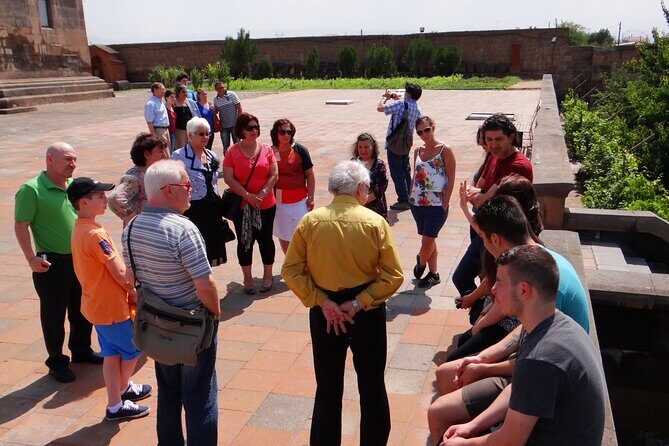
You start around 9:30am with pickup offered, travel in an air-conditioned vehicle, and keep the day moving with a local guide. The group stays small (max 15), which matters when you want questions answered. On one visit, the guide named Nvard was known for strong English and even helping a solo traveler with photos—exactly the kind of practical kindness that makes a tour feel personal.
In This Review
- Key Points I’d Put on Your Shortlist
- Tsitsernakaberd: Remembering at Armenia’s Genocide Memorial
- Saint Hripsime Church: A 7th-Century UNESCO Stop You’ll Understand
- Etchmiadzin and the Museum of the Holy Sea: What You’ll See During Restoration
- Saint Gayane Church and Vagharshapat: The Story Angle at UNESCO #3
- Noy Yerevan Ararat Brandy-Wine-Vodka Factory: Portwine 1941 and Two Brandies
- Price, Timing, and What You Get for $100
- Best Fit: Who Will Like This Tour the Most
- Should You Book This Tour?
- FAQ
- How long is the tour?
- What time does the tour start?
- Does the tour include pickup?
- Is lunch included in the price?
- What’s included for Etchmiadzin and the cathedral area?
- What is included in the NOY tasting?
- Is admission included for Tsitsernakaberd and Saint Hripsime Church?
- Is there a refund if I cancel?
Key Points I’d Put on Your Shortlist
- Tsitsernakaberd first: a focused genocide memorial with free admission, eternal-flame symbolism, and a museum on-site.
- Saint Hripsime Church (UNESCO): a 7th-century stop with a short visit and free admission.
- Catholicos Komitas context: you’ll get the human story tied to Saint Hripsime rather than just seeing stone.
- Echmiadzin (Holy Sea) cathedral views mainly from outside: restoration limits interior access, so you’ll spend time in the museum instead.
- Holy relics in the Echmiadzin museum: a part of Noah’s arch and the Holy lance are mentioned as part of what you can see.
- NOY tasting included: Portwine from 1941 plus two brandies, guided, and wrapped into the tour price.
Tsitsernakaberd: Remembering at Armenia’s Genocide Memorial
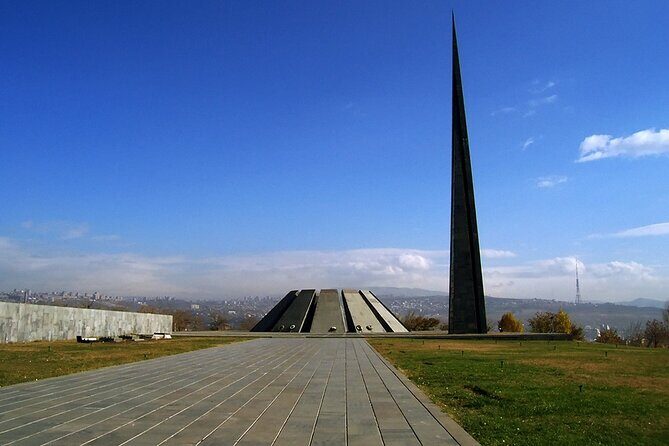
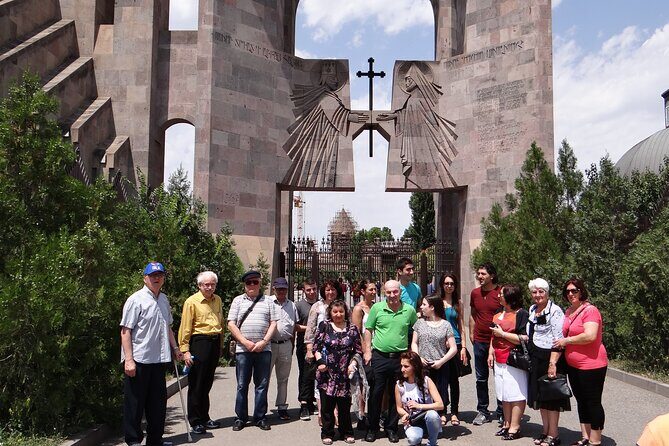
I start this day where you should: with memory. Tsitsernakaberd is a memorial complex in Yerevan dedicated to the victims of the Armenian Genocide. It’s made of a tall granite stele surrounded by twelve slabs. Those slabs represent the twelve provinces of historical Western Armenia where the genocide took place. At the base of the monument, there’s an eternal flame meant to keep the lives lost present in your mind.
You’ll have about 45 minutes here, and admission is free. That time feels short only if you want to read every label cover to cover. If you take it as a guided “get your bearings” stop, it works well. The on-site museum adds the missing context, showing the history and atrocities connected to the genocide. It’s not casual sightseeing. Even if you’ve read up ahead of time, seeing the monument in person changes the emotional tone of the day.
Practical tip: dress respectfully. This is a site of mourning, not a photo set. Also, if your day is packed later with churches and tastings, you’ll feel the contrast in your body. That’s normal—this tour is designed like a story arc.
Other Armenian wine and brandy tours we have reviewed in Yerevan

Saint Hripsime Church: A 7th-Century UNESCO Stop You’ll Understand
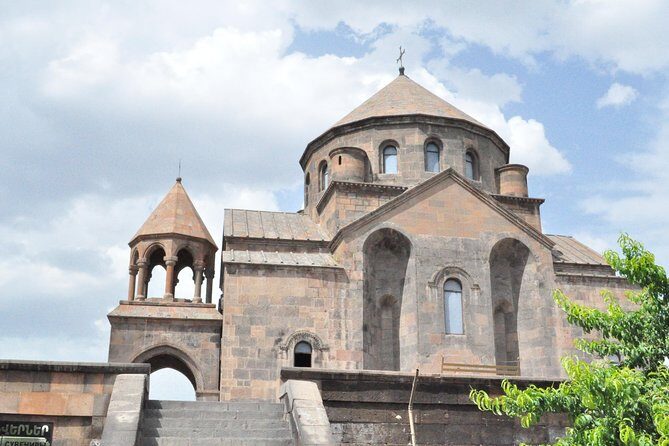
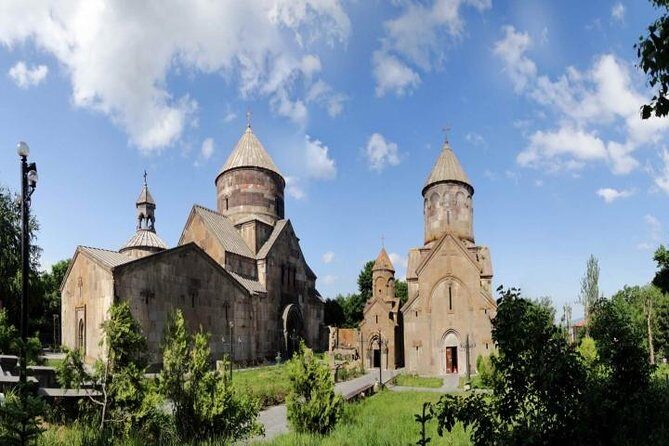
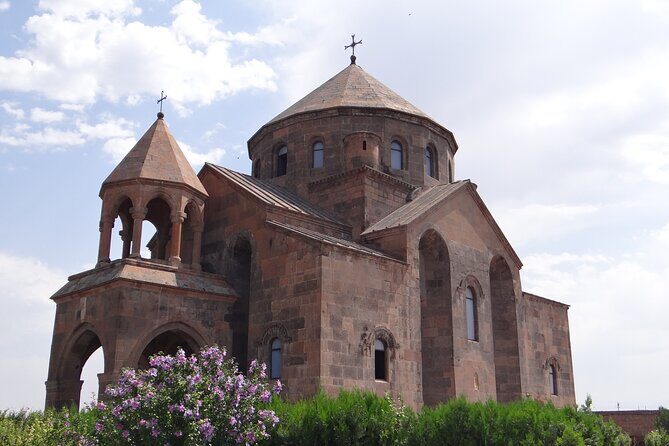
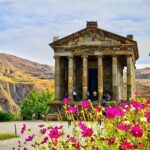
Next comes Saint Hripsime Church, one of Armenia’s older survivors and a UNESCO-listed site. This is a shorter stop—around 30 minutes—and admission is free. The point isn’t to rush. It’s to show you how early Armenian church architecture holds up centuries later, and to connect the building to the people behind it.
What makes this stop click is the link to Catholicos Komitas. Your guide is set up to explain his life alongside what you’re seeing at Saint Hripsime. That matters, because otherwise a church can blur into another stop of stonework and dates.
You’re not meant to treat this like a checklist. I’d use the time to notice proportions and layout rather than trying to photograph every angle. The church gives you a sense of how Armenia’s early Christian identity took physical form—simple, solid, and meant to last.
Etchmiadzin and the Museum of the Holy Sea: What You’ll See During Restoration
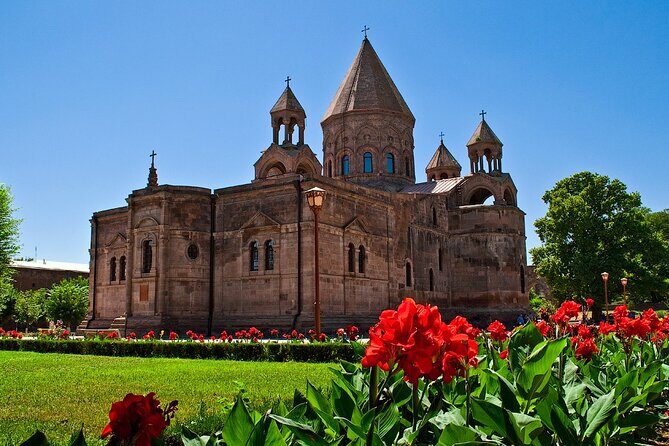
Echmiadzin—also called the Holy Sea—is the main destination, and it’s described as the most ancient Christian cathedral in the world. In other words: you’re not just visiting another church. You’re visiting the center of the Armenian Apostolic Church.
Here’s the catch, and it’s important for your expectations. The cathedral is under restoration, so you can only see it from the outside. That means you’ll feel a little less like you’re touring an interior space and a little more like you’re witnessing a living, cared-for religious site.
That’s why the plan includes time at the museum of Echmiatsin. Admission is included, and you’ll have about 1 hour. The museum includes relics mentioned as including a part of Noah’s arch and the Holy lance. Even if you’re not the type who follows every legend closely, you’ll still benefit from seeing how Armenian Christian tradition treats objects as anchors for belief, memory, and identity.
Drawback to keep in mind: if your dream is an inside cathedral visit, restoration can feel like a letdown. The upside is that the museum gives you something you can absorb right away—context you can’t get just by looking at the outer walls.
If you want to make the most of that hour, ask your guide what they think is most important to notice in the museum display. You’ll walk out with clearer meaning, not just more information.
Saint Gayane Church and Vagharshapat: The Story Angle at UNESCO #3
Vagharshapat’s UNESCO set is more than three separate monuments. It’s a timeline of faith and change, and Saint Gayane is where the story turns toward Armenia’s conversion to Catholicism.
This stop is part of the guided UNESCO visit. You’ll get explanations from your guide about what Saint Gayane represents and why it matters in the broader religious history of the region. Even with limited time, it usually lands better than a random stop because you’ve already seen Saint Hripsime and you’ve already heard how leadership and belief shaped church-building.
How to approach Saint Gayane: treat it like a chapter, not a landmark photo op. After the memorial and the earlier church, the emotional pacing of the day stays focused. You’re not bouncing between unrelated sights. You’re watching religious identity and political history intertwine.
And yes, because the tour is time-bound, you won’t spend as long here as you would on a self-guided loop. That’s the trade for packing in multiple UNESCO stops from Yerevan in one day.
Noy Yerevan Ararat Brandy-Wine-Vodka Factory: Portwine 1941 and Two Brandies
When the tour shifts from churches to spirits, it can sound strange—until you taste what you’re doing and remember Armenia’s longstanding love of grape-based drinks.
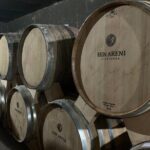
The final stop is the Noy Yerevan Ararat Brandy-Wine-Vodka Factory in Armenia’s Ararat Valley area. The distillery traces back to 1877, and it’s known for Armenian brandies aged in oak barrels for decades. The style is described as smooth and complex, and the factory uses traditional distillation methods with locally sourced grapes.
You’ll get a guided experience and a tasting. Included is a “degustation” of portwine and two types of brandy. The tour data specifies Portwine from 1941, plus two brandy testing pours. This is the part of the day where your guide’s explanations help the most: you’re not just drinking. You’re learning why the aging and the production choices matter.
A practical way to enjoy the tasting:
- Take small sips and pause between them.
- Smell first, then taste. You’ll catch more differences that way.
- If you’re not used to stronger spirits, go slow. Portwine first can set the stage.
Is it mandatory to like alcohol? No, but the tour includes it as part of the experience. If you prefer to skip alcohol entirely, you should know this tour is designed around a tasting, so you may want a different option.
Other Echmiadzin and Zvartnots tours we have reviewed in Yerevan

Price, Timing, and What You Get for $100
At $100 per person, this day trip isn’t a budget-only throwaway. But it also isn’t overpriced for what you’re getting: guided UNESCO-area visits plus memorial time plus a distillery tasting.
You’re looking at roughly 5 hours total (about a half-day), starting at 9:30am. The schedule is built to hit multiple major points without requiring you to coordinate transport and separate admissions. Admission is also handled for key parts: Tsitsernakaberd and Saint Hripsime are listed as free, and the Echmiadzin museum and the tasting are included.
What you might want to plan for: lunch. Lunch isn’t included, but it’s listed as $15/person if required. In practice, this means you should either budget for a meal stop or bring something small enough to tide you over during the gaps between stops.
Group discounts and pickup are also part of the deal. Add in the air-conditioned vehicle, especially in warm or variable weather, and the value starts to make sense: you’re paying for ease and for a guide who can connect the dots between memorial, church sites, and Armenian spirits.
Best Fit: Who Will Like This Tour the Most
This is a strong match if you want:
- Major sites in one day from Yerevan, without the hassle of planning each leg.
- A guided narrative that ties architecture to people—especially around Saint Hripsime and Catholicos Komitas.
- A food-and-drink finish that feels like a cultural celebration rather than a random store stop.
You’ll also likely enjoy the small group size (max 15), because it makes it easier to ask questions and keep the day from feeling chaotic.
If you’re a person who hates alcohol tastings or expects long interior church time at Etchmiadzin, you might find the format mismatched. The cathedral is under restoration, and the tasting is included.
Should You Book This Tour?
Book it if you want a half-day sampler that’s actually coherent: memorial remembrance, UNESCO church context, and then a guided taste of Armenian brandy culture. The $100 price makes more sense when you count in guide time, transport, museum access, and the included tasting.
Skip it if your main priority is indoor access at Etchmiadzin or if alcohol tastings are a hard no for you. This tour is built around what’s included, and right now the cathedral viewing is intentionally limited.
FAQ
How long is the tour?
The duration is listed as about 5 hours.
What time does the tour start?
The start time is 9:30am.
Does the tour include pickup?
Yes, pickup is offered.
Is lunch included in the price?
Lunch is not included. It’s listed as $15/person if required.
What’s included for Etchmiadzin and the cathedral area?
You’ll visit the Echmiadzin museum, where the data says you can see items including a part from Noah’s arch and the Holy lance. Museum tickets are included.
What is included in the NOY tasting?
You get a tasting of Portwine from 1941 and two types of brandy, and the tasting is included.
Is admission included for Tsitsernakaberd and Saint Hripsime Church?
Tsitsernakaberd and Saint Hripsime Church are listed as free admission.
Is there a refund if I cancel?
No. The experience is non-refundable and cannot be changed for any reason.