REVIEW · YEREVAN
Group Tour: Echmiadzin Cathedral & churches, Zvartnots Temple
Book on Viator →Operated by Hyur Service · Bookable on Viator
Yerevan is great, but Echmiadzin is the real spiritual punch. This 4 to 5 hour circuit takes you to UNESCO-listed Christian landmarks—St. Hripsime, St. Gayane, Etchmiadzin Cathedral complex, and Zvartnots—so you can understand why this corner of Armenia matters. I especially like the tight, organized flow that fits a busy schedule, and the fact that entrance fees and even light bites are handled for you. The only real drawback is that it can feel crowded and fast on Sundays, when churches get busy and timing can get a bit tight.
This tour is also a great first-step if you’re new to Armenian church architecture. You’ll get a quick visual tour of cupola styles and domed-basilica design, plus some serious “how did they build that” moments at Zvartnots. If you want a slower pace or perfect quiet for photos, go in knowing it’s a group day with limited time per stop.
In This Review
- Key things to know before you go
- Getting there from Yerevan: Hyur Service meeting point and how the day runs
- St. Hripsime Church: the cross-cupola shape and a martyr’s tomb
- St. Gayane: domed-basilica design and the Ararat moment
- Etchmiadzin Cathedral complex: where Armenia’s Apostolic center lives
- Zvartnots Temple: reconstruction, columns, and the Toramanyan story
- Guide and group size: bilingual explanations, radios, and how to get the most
- Value check: what $25 covers and what you should plan for
- Comfort and pacing: how long you’ll really have at each stop
- Should you book this churches circuit?
- FAQ
- FAQ
- How much does the tour cost?
- How long is the tour?
- Are entrance fees included?
- What food and drinks are included?
- Is hotel pick-up included?
- What languages is the guide?
- Is this tour available on Sundays?
- Is it only outdoors?
Key things to know before you go
- Entrance fees are included, so you do not do the math mid-trip.
- Snacks, beverages, bottled water keep you fueled between church visits.
- Bilingual guiding (English plus Russian consecutively) means explanations for most people, even in mixed groups.
- UNESCO sites back-to-back, so you can compare architectural styles in one sitting.
- Sunday liturgy is a chance, not a guarantee you can plan your whole day around.
- Group size can be up to 49, so expect some waiting and sharing space.
Getting there from Yerevan: Hyur Service meeting point and how the day runs
The tour starts at Hyur Service, 96 Nalbandyan poxoc, in central Yerevan. There is no hotel pick-up, so you’ll want to arrive a little early, get oriented, and be ready when the vehicle departs.
The overall time is about 4 to 5 hours, with short stops and one longer church visit. That means it’s not a “wander at your own pace” style day—you’re moving with a schedule. On the upside, if you have only a morning or afternoon, this is one of the most efficient ways to see major sacred sites outside the city.
Other Echmiadzin and Zvartnots tours we have reviewed in Yerevan

St. Hripsime Church: the cross-cupola shape and a martyr’s tomb
St. Hripsime is one of the clearest introductions to Armenian church design. You’ll see the cross-cupola plan laid out with architectural simplicity, but also with that impressive “height” feeling inside and around the structure.
This is also where the story gets personal. The tomb of the Christian martyr Virgin Hripsime is located in the church’s sacristy area. The site is on the UNESCO World Cultural Heritage list, and it’s one of those places where the building’s form helps you remember the religious meaning behind it.
A practical note: because the stop is around 30 minutes, your best strategy is to decide what you want most—exterior details, interior look, or the tomb area—and then focus. Trying to do everything slowly can make you feel rushed.
St. Gayane: domed-basilica design and the Ararat moment
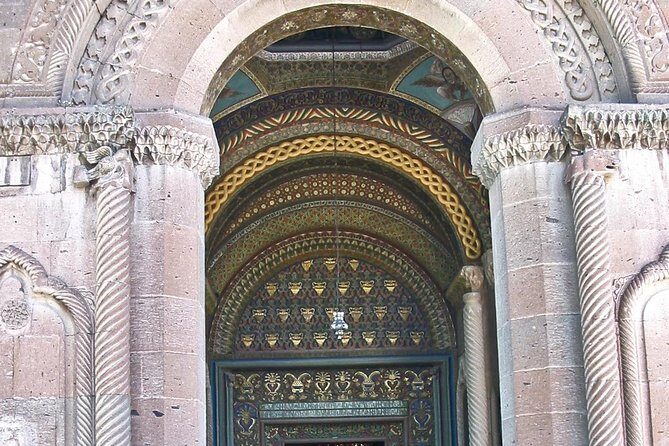
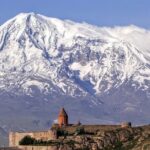
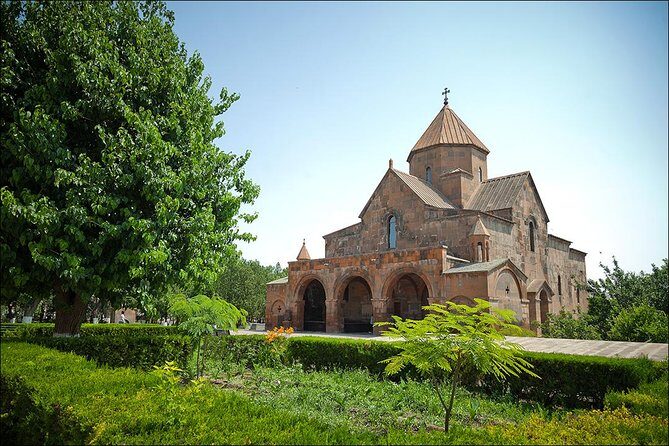
Not far from Etchmiadzin Cathedral, St. Gayane is built in the domed-basilica style and dates to the 7th century. If the light and weather cooperate, you may catch a classic viewpoint: the silhouette of the cupola against Ararat’s white peaks. Even when Ararat is partially hidden, the church’s placement still gives you a sense of why this area became a major religious center.
There’s also a legend tied to the church’s location, linked to Virgin Gayane, who is said to have been martyred for preaching Christianity. The important part for you on-site is how that legend and the architecture fit together: the building feels both solemn and intentionally placed, not random.
With a 30-minute stop, treat this one as a “see the structure, learn the core story, move on” visit. If you’re the type who likes to stand back and take photos, plan to do that early—later, the group pace usually catches up.
Etchmiadzin Cathedral complex: where Armenia’s Apostolic center lives
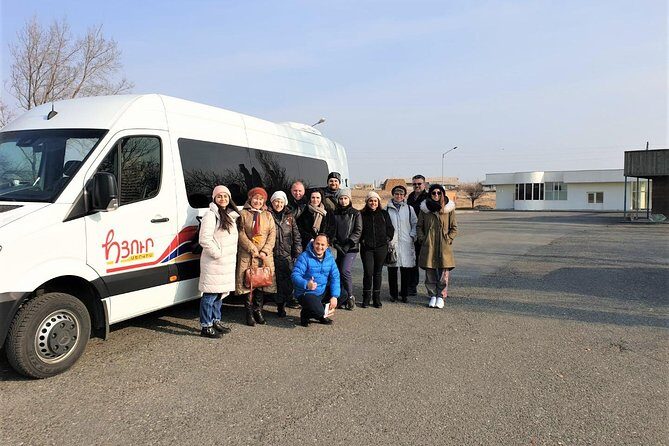
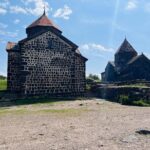
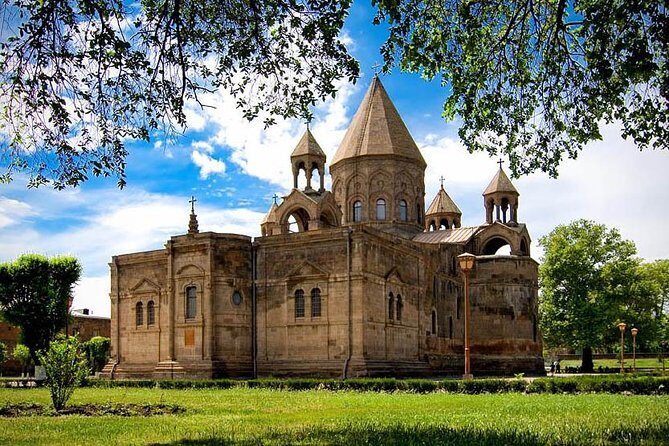
Etchmiadzin is the heart of Armenian Apostolic Christianity. The Cathedral of Etchmiadzin traces back to the early 4th century, and it’s described as one of the oldest churches in the world—so even if you’re not a deep-history person, the age alone changes how you experience the place.
You’ll also hear the major origin story: the cathedral is traditionally connected to Gregory the Illuminator’s dream and the apparition of Jesus Christ. That kind of storytelling matters here, because it gives you a thread from the legend to the physical site—why this specific spot became the center.
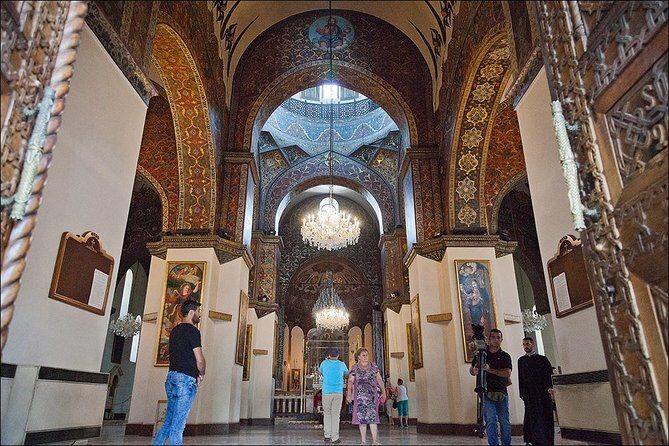
Inside, you can look for frescoes created by the Hovnatanyan family. Around the cathedral, you’ll also see the residence of the Catholicos and the nearby Theological Academy. That layout makes the complex feel alive in a practical way; this isn’t only an old monument you look at and leave.
The stop length is about 1 hour, which is enough time to take in the main cathedral experience without the day turning into a full-day grind. Still, if church interiors are busy, you may need to accept some crowd flow. On Sundays especially, the chance to participate in liturgy can be amazing—but it can also tighten the schedule.
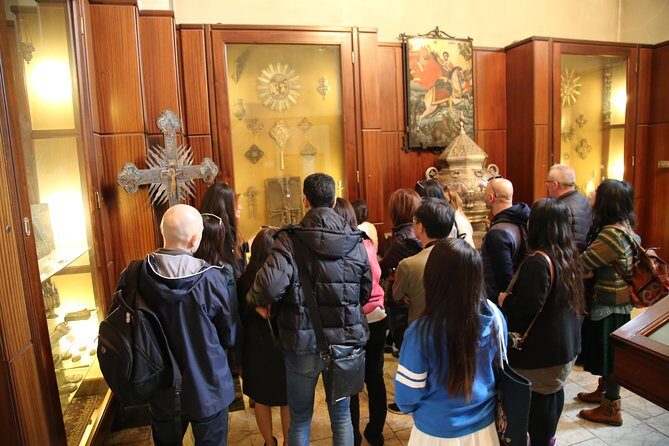
One more detail worth planning for: there can be extra moments like a treasury visit if it’s arranged by staff and available that day. Access and timing can vary, so keep expectations flexible.
Zvartnots Temple: reconstruction, columns, and the Toramanyan story
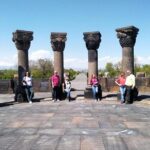
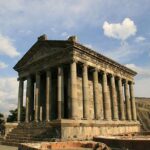
Zvartnots is the “wow” finish for a lot of people. The temple is attributed to 7th-century Armenian architects and was built on columns, but it only survived until the 10th century. Then centuries later, the site was excavated in the early 20th century.
What you see today is not the original structure. A reconstruction model was designed by Armenian architect Toros Toramanyan, and it was reportedly hard for specialists to believe at the time because of how large and complex it looked for that era. Here’s the extra twist that makes it more than just a guess-and-rebuild story: a bas-relief linked to St. Chapelle in Paris later supported Toramanyan’s version. The bas-relief includes Zvartnots Temple with Noah’s Ark, and it lines up with the reconstruction model.
For you, this stop is valuable because it explains a real tourism lesson: archaeology is not only about digging—it’s also about interpretation. You get to stand in front of a reconstructed architecture and understand why the shapes make sense.
The Zvartnots visit is about 45 minutes, so you can slow down a bit compared to the earlier stops. If photos are important to you here, this is the place to give yourself extra attention.

Guide and group size: bilingual explanations, radios, and how to get the most
The tour includes a professional guide with English plus Russian consecutively. In the best-run versions of this format, the guide clearly manages pacing and keeps both language groups included. On this route, guides such as Marina, Manya, Karen, Gayana, and Tigran have handled the bilingual flow in a way that helps the whole group follow the meaning, not just the facts. Joseph and Spartak show up as drivers in many accounts too, with consistent notes about calm, steady driving.
Still, this is a group tour with a maximum of 49 people. Bigger groups can mean more waiting and less personal time at each stop, even if the guide is excellent. Some days also feel louder than you want—especially when there’s no working microphone or when language groups are mixed in a way that doubles the explaining.
My practical advice: if you have a few specific questions, write them down. Ask one or two at the most logical stop (usually Etchmiadzin or Zvartnots where there’s context), then let the group pace do its job. The guide’s job is balancing time, crowd flow, and two languages, so give them a fair chance to keep it moving.
Value check: what $25 covers and what you should plan for
At $25 per person, this tour is good value if you want major UNESCO sights without paying separate entrance fees. Entrance tickets are included, and the day also includes bottled water and pastries, plus snacks and beverages. You’re not stuck trying to find food between churches, which is a big deal when time is tight.
It also comes with practical extras that many budget tours skip: an air-conditioned vehicle, WiFi in the vehicle, vehicle and passenger insurance, and a mobile ticket. That all reduces the small “friction costs” that add up during a half-day excursion.
What’s not included is lunch. Most days, you’ll simply be moving through the sites without a dedicated lunch stop. There is an exception in the holiday period from Dec 25 to Jan 7, when lunch is paid on the spot (about 10–12 USD). If you’re visiting outside that window, eat before you go, or bring a snack you can keep for yourself.
Comfort and pacing: how long you’ll really have at each stop

The schedule is built around short, high-impact visits:
- St. Hripsime: about 30 minutes
- St. Gayane: about 30 minutes
- Etchmiadzin Cathedral complex: about 1 hour
- Zvartnots Temple: about 45 minutes
That time allocation means you can see a lot, but you may not linger. If you love photography, plan to shoot in bursts and accept that some moments happen while you’re moving.
Transportation is included with an air-conditioned vehicle. Still, some vehicles can feel tight depending on the group size and seat assignment, and seats aren’t known in advance. If you’re sensitive to cramped seating, consider arriving early and asking staff about the best spot once you’re on the bus.
Weather is handled in the sense that the tour operates in all weather conditions. So dress for rain or chilly wind if needed, and remember churches can involve indoor time where you’ll want to be comfortable.
Should you book this churches circuit?
Book it if you’re doing Armenia for the first time and you want a smart overview of Armenian Apostolic sites without spending half your day figuring things out. It’s also a strong pick if you have limited time in Yerevan and want UNESCO stops grouped into one smooth arc—from the church architecture at Hripsime and Gayane to the bigger center at Etchmiadzin and the reconstructed grandeur of Zvartnots.
Skip it or switch to a private tour if you need a slow pace, very quiet photo time, or you strongly prefer one language with minimal switching. Sundays can be special for liturgy, but they can also mean bigger crowds and less flexibility with timing.
FAQ
FAQ
How much does the tour cost?
It costs $25.00 per person.
How long is the tour?
It runs about 4 to 5 hours.
Are entrance fees included?
Yes. Entrance tickets are included, and the stops are built around UNESCO-listed sites.
What food and drinks are included?
You’ll get bottled water, pastries, snacks, and beverages.
Is hotel pick-up included?
No. You’ll meet the group at Hyur Service, 96 Nalbandyan poxoc, Yerevan.
What languages is the guide?
The guide provides English plus Russian consecutively.
Is this tour available on Sundays?
On Sundays, there is a chance to participate in liturgy, depending on conditions that day.
Is it only outdoors?
No. You’ll visit active church sites and cathedral interiors, plus the reconstructed Zvartnots area.