REVIEW · YEREVAN
Private Tour to Echmiadzin,St.Hripsime & Gayane Churches, Zvartnots Temple
Book on Viator →Operated by Jan Armenia Tours · Bookable on Viator
Four sacred stops, one smooth day. This private tour from Yerevan strings together Armenia’s most important early Christian landmarks—Etchmiadzin, St. Hripsime, St. Gayane, and Zvartnots—with the kind of timing that keeps history from turning into a long slog. I love how the day mixes major monuments with smaller details you’d miss on your own, like the cathedral’s unusual altar layout and the monastery grounds’ carved cross-stones. I also like that it’s small-group private (up to 3), so you can actually ask questions as you go, not just follow a crowd.
One thing to consider: this is a highlights route, so each site is time-boxed (about 30–60 minutes per stop). If you want a slower, deeper museum-style visit—especially at Echmiadzin’s treasury—you may need to plan extra time outside the tour.
In This Review
- Quick hits
- Why these sites belong together
- Getting from Yerevan without the headache
- Etchmiadzin Monastery: the meaning is built into the building
- The treasury museum: fascinating, but check what’s included
- Cross-stones you can actually read
- St. Hripsime Church: UNESCO grade craftsmanship, plus real names
- St. Gayane Church: architecture, relics, and the matah rite room
- The matah rite room: culturally specific and worth seeing
- Zvartnots Temple: ruins with scale models that finally make sense
- Price and logistics: value for up to 3 people
- What the optional guide adds (and what to ask)
- Who should book this tour, and who might want more time
- Should you book this tour?
- FAQ
- How long is the private tour?
- What is the price, and how many people can join?
- Do you pick up from my hotel in Yerevan?
- Is the tour offered in English?
- Are entrance fees included for Zvartnots and the Etchmiadzin treasury museum?
- Is lunch included?
- Can I cancel for a full refund?
Quick hits
- Hotel pickup + drop-off in Yerevan makes the day feel effortless.
- UNESCO sites at St. Hripsime and Zvartnots keep the “why it matters” clear.
- Etchmiadzin’s cathedral details include a second altar connected to the descent of Christ.
- Cross-stones on monastery grounds include the Amenaprakich (1279) and a memorial to the 1915 genocide victims.
- St. Gayane’s matah rite room adds a rare look at older ceremonial tradition.
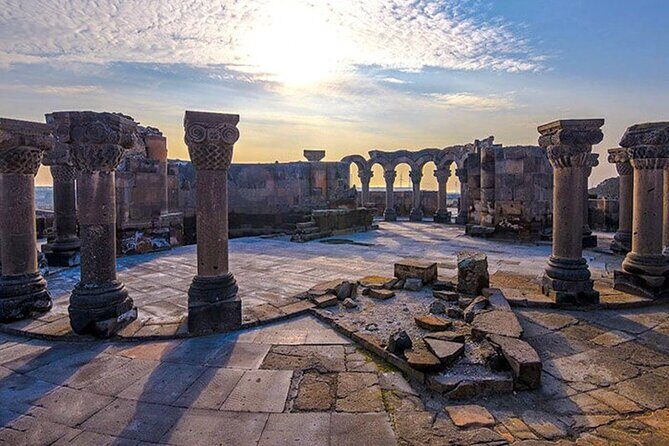
- Ruins with scale models at Zvartnots help you picture what you’re really looking at.
Why these sites belong together
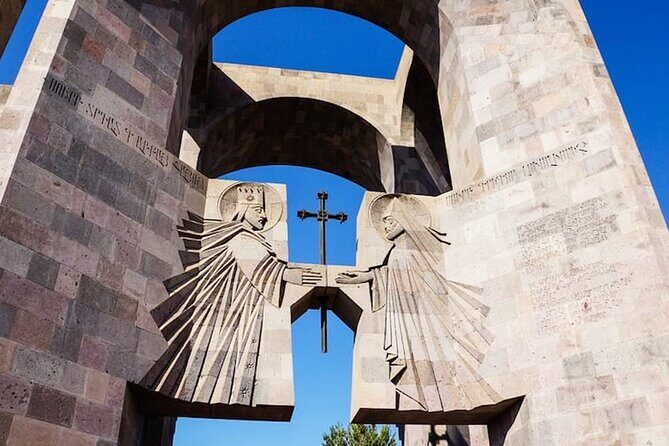
This tour works because the four stops tell a connected story. You start at Etchmiadzin, the spiritual center for Armenian Christianity, then move through two of the country’s most famous early church buildings—St. Hripsime and St. Gayane—before finishing at Zvartnots, where you’re seeing a masterpiece only as ruins.
The result is that you don’t just see stone and arches. You get a framework for what shaped Armenian architecture and worship over centuries: the locations chosen for sanctity, how churches were rebuilt and commemorated, and how later generations kept the meaning alive with monuments, burials, relics, and preserved art.
And since it’s private transportation with a driver and optional guide, you’re not stuck trying to piece together routes or translations on the fly. You can focus on what matters: the buildings, the symbolism, and the atmosphere.
Other Echmiadzin and Zvartnots tours we have reviewed in Yerevan

Getting from Yerevan without the headache
The tour is about 7 hours total, and it starts with hotel pickup and drop-off. You’ll go by air-conditioned vehicle, with bottled water and WiFi on board (nice on a warm day, and helpful if you want to look up extra context while riding).
You’ll also have mobile tickets, and the tour is offered in English. The guide service is listed as optional, so your plan can match your style. If you like learning as you walk, add a guide. If you’d rather keep it light and mostly rely on signage, you can still do the route with the driver.
The timing is realistic for a day trip, but it’s not an all-day free-for-all. The stops are structured so you’ll see everything without rushing for transport between them.
Etchmiadzin Monastery: the meaning is built into the building
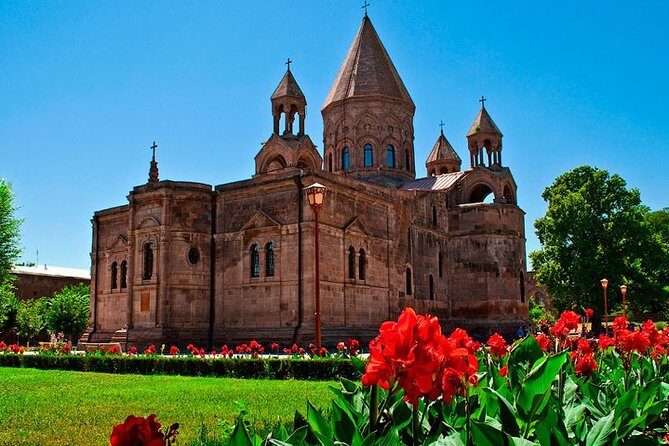
Etchmiadzin is the kind of place where even small details feel intentional. The cathedral is described as the first Christian cathedral associated with Echmiadzin, founded in the IV century BC in the tour notes. That’s early enough that the site carries the weight of origin stories, not just architecture.
The name itself matters. It’s explained as meaning place of the descent of the Only Begotten. The tour calls attention to a feature that helps you understand why people treat this as sacred ground: there’s not only the main altar in the eastern part, but also another altar in the middle, marking the site of the descent of Christ.
I also like that Etchmiadzin gives you multiple “layers” at once:
- You’re in a living religious complex, not a standalone monument.
- You get church symbolism plus curatorial objects.
- You walk through a site that includes a residence tied to the Armenian patriarch—the Catholicos of all Armenians.
The treasury museum: fascinating, but check what’s included
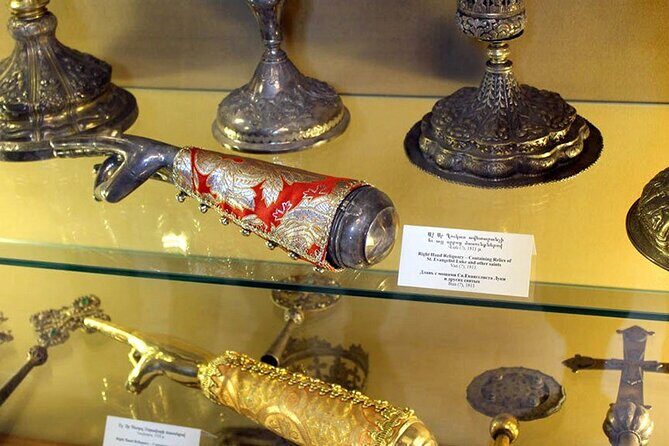
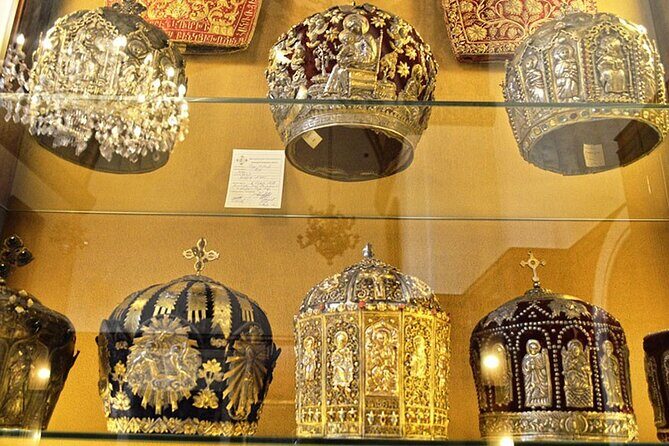
The Treasury Museum is mentioned as being on the right-hand boundary of the cathedral, with relics, church clothes embroidered with gold and pearls, catholicos’ staffs and crosses, and ritual objects made of gold, silver, and ivory.
Here’s the practical part: the stop itself is marked as free admission in the itinerary, but the tour listing says the entrance fee of the Echmiadzin treasury museum is not included. So you can likely see the broader complex without paying extra for that portion, but you should budget if you want the treasury specifically.
Cross-stones you can actually read
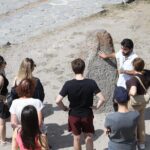
One of my favorite ways to experience a historic site is to slow down and look at what people carved into the landscape. Etchmiadzin includes cross-stones on the monastery complex grounds, including:
- Amenaprakich (1279)
- A cross-stone devoted to the victims of the 1915 genocide
Even if you don’t read every inscription, the presence of these memorial stones changes the mood. It’s not just “old architecture.” It’s memory placed in stone, and it gives you a clearer sense of how faith and national history share space here.
Other private tours in Yerevan


St. Hripsime Church: UNESCO grade craftsmanship, plus real names
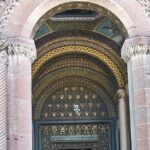
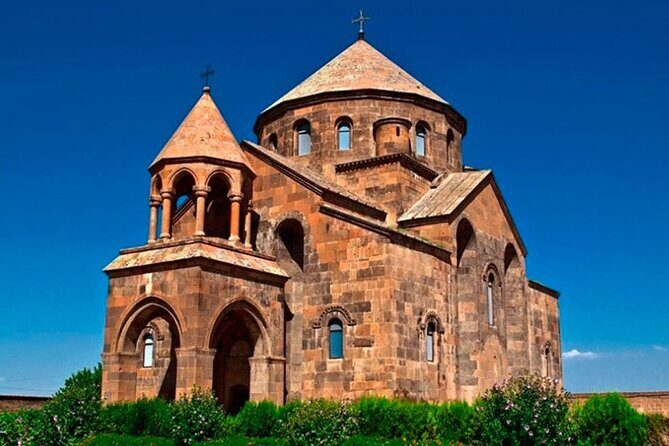
St. Hripsime is a shorter stop, but it’s built for impact. The tour notes say the church was founded in the 7th century by Catholicos Komitas I Aghtsetsi, placed at the sepulcher of Saint Hripsime.
It’s also listed as part of UNESCO World Heritage since 2000. That matters because UNESCO sites usually come with a baseline of preservation and documented significance—so you know you’re seeing something that has been recognized beyond local pride.
The church adds a human element through burial history. Two prominent Armenian Catholicoses are buried in the courtyard of St. Hripsime Temple:
- Catholicos Astvatsatur (1715–1725)
- Catholicos Garaped II Oolnetzi (1725–1729)
If you’re the kind of person who likes to understand why a building is where it is, this is a strong stop. The location at a saint’s burial ground turns the visit from sightseeing into a kind of pilgrimage logic—simple, direct, and deeply tied to worship.
St. Gayane Church: architecture, relics, and the matah rite room
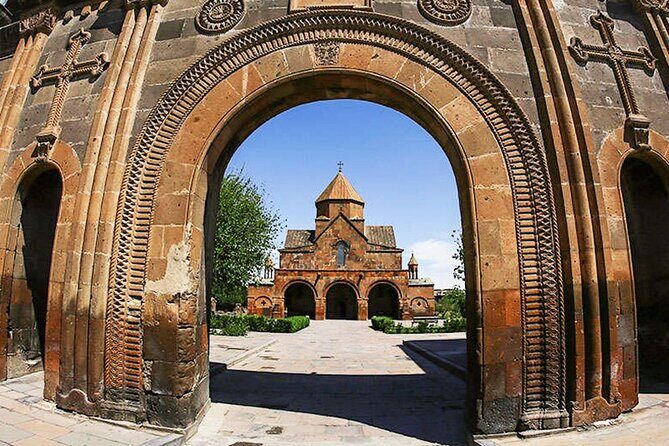
St. Gayane Temple is another 7th-century highlight, and it’s especially interesting because it sits over earlier worship space. The tour notes say it was built in the VII century on the place of a IV century chapel—one of the best monuments of Armenian architecture.
Two details really help you “read” this church:
- The tour explains that relics of Saint Gayane are kept in the southern wall, next to the altar niche.
- Above the western entrance, murals from the 17th century have been preserved, focused on the birth of Christ.
That’s a good combo for a half-hour stop: you get both the sacred objects (relics) and the visual storytelling (murals). You’re not only looking at the exterior shape; you’re seeing how meaning is carried inside the space.
The matah rite room: culturally specific and worth seeing
Near St. Gayane Temple, the tour notes mention a special room where animals are sacrificed and stabbed from the time of St. Gregory the Illuminator. This rite is called matah and is described as being customary for occasions like weddings and birth of a child.
This is the sort of detail that can either be confusing or fascinating, depending on your expectations. If you come prepared for the fact that religious history isn’t sterile or museum-like, you’ll likely find this element memorable. It’s also a reminder that the site isn’t just about distant centuries—it’s connected to living ritual forms (even if practices vary over time).
Zvartnots Temple: ruins with scale models that finally make sense
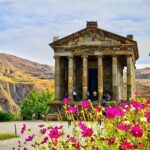
Zvartnots is where the tour gets extra clever. When you arrive, you’re not looking at a fully standing temple—you’re looking at what’s left after destruction.
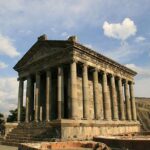
The tour describes Zvartnots as meaning Temple of Vigil Forces, built in the VII century and constructed over 20 years. Then comes the big twist: the temple was destroyed by a powerful earthquake (noted as XX century in the tour information), leaving only ruins.
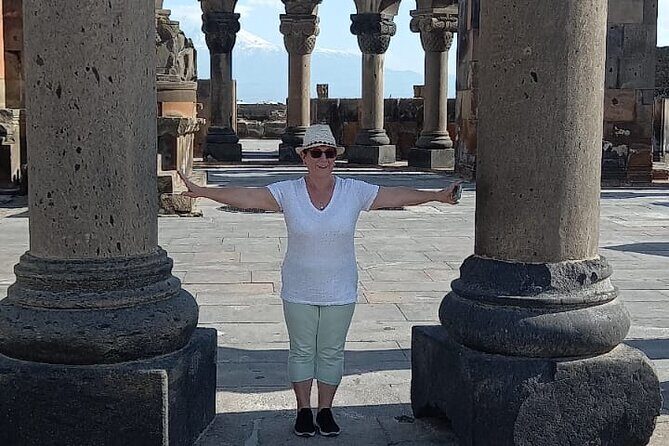
Here’s why I like the way this stop is set up: the ruins are part of an archaeological reserve and museum founded in 1937, and you can see model-versions of the reconstruction of the temple, plus numerous sculptural fragments in impressive size.
That combination—ruins outside, reconstruction models inside or nearby—helps you build a mental picture. Without it, archaeological sites can feel like you’re guessing. With models, you can connect the dots and understand what you’re seeing rather than just accepting “it was big once.”
This site is also included in UNESCO World Heritage. Even in ruins, the recognition is earned.
Price and logistics: value for up to 3 people
The price is $70 per group (up to 3) for about 7 hours. That’s not priced per person in the way many tours are, and that changes the math quickly.
If you’re traveling as a small group, this can be a strong value because you’re basically paying for private transport and guide support while still getting picked up from your hotel and returned afterward. For many people, that saves time and stress alone—especially on a day where you’re hopping between multiple historic districts.
Keep your budget reality check on two items:
- Lunch is not included
- Entrance fees are not included for Zvartnots and the Echmiadzin treasury museum
The good news is that lunch is a choice you can personalize (you might want something simple near your return route), and the biggest “pay extra” items are clearly named. No surprise surprises.
Also, the tour is said to be booked on average 50 days in advance, which suggests it’s popular. If your dates are firm, don’t wait until the last moment.
What the optional guide adds (and what to ask)
A lot of historical sites are easier when someone explains the symbolism in plain language. The guide service is listed as optional, but the site descriptions clearly reward interpretation—like the meaning of Etchmiadzin’s cathedral name, the second altar marking the descent, and the exact context of relics and burials.
If you get a guide such as Marianna and Arias (both names appear in the tour’s past feedback), you can often expect a clear explanation of Armenian historical importance that connects architecture to faith. Another named guide in the feedback is Arak, noted for insight into the historical importance of Armenia. You might not get the same guide, but the style of explanation in that kind of guide-focused setup is exactly what makes these stops click.
If you want to get the most out of your day, ask simple, site-specific questions:
- Why is there a second altar at Etchmiadzin, and what does it represent?
- In St. Hripsime, how do the courtyard burials fit into the site’s story?
- What should I notice first at St. Gayane: relic placement, murals, or the matah rite room?
- For Zvartnots, which reconstruction model matches what remains on the ground?
That turns a good trip into a memorable one.
Who should book this tour, and who might want more time
This tour is a great match for you if:
- You want UNESCO-level Armenian Christian sites in one organized day.
- You care about how early Christianity shaped places, not just dates on a timeline.
- You like the convenience of pickup, AC vehicle, and structured stop times.
It’s less ideal if:
- You want long museum time. For example, Etchmiadzin’s broader treasury content may deserve more than the tour’s one-hour stop length.
- You prefer slow wandering with lots of independent exploration.
That said, the format is efficient for first-timers. It gives you a strong foundation. After this, you’ll know what you’d want to revisit deeper.
Should you book this tour?
Yes, if your goal is to see Etchmiadzin, St. Hripsime, St. Gayane, and Zvartnots in one day with easy Yerevan logistics and room for questions. The setup is practical: pickup and drop-off, private transportation, English support, and highlights that connect meaningfully.
I’d book with a small caveat: plan to treat it as a best-of route, not a slow study session. If you’re the kind of person who wants to linger for hours in museums, consider adding extra time around Etchmiadzin (and budget the treasury entrance), or plan a separate half-day after your tour to go deeper on the stop that grabs you most.
FAQ
How long is the private tour?
The duration is about 7 hours.
What is the price, and how many people can join?
It costs $70 per group, for up to 3 people.
Do you pick up from my hotel in Yerevan?
Yes. The tour includes hotel pickup and drop-off, and pick-up can be organized from your hotel, hostel, or apartment.
Is the tour offered in English?
Yes, it’s offered in English.
Are entrance fees included for Zvartnots and the Etchmiadzin treasury museum?
No. The entrance fee for Zvartnots Temple is not included, and the entrance fee of the Etchmiadzin treasury museum is also not included.
Is lunch included?
No, lunch is not included.
Can I cancel for a full refund?
Yes. You can cancel up to 24 hours in advance for a full refund.