REVIEW · YEREVAN
7 Day Tour through Armenia
Book on Viator →Operated by Ari Tour · Bookable on Viator
Armenia rewards curious travelers, site after site. I love the way this week balances city walking with big, ancient stops like Geghard and Lake Sevan. I also like the practical feel: pickup is offered, the tour is in English, and most of the major sites have admissions handled for you.
The only real drawback is how full the days are. Expect lots of churches, monasteries, and viewpoints packed into a short time, so if you prefer long unplanned breaks, plan to move with the group and keep an easy pace.
In This Review
- Key highlights worth caring about
- How the pacing works: Yerevan energy plus monastery days
- Cascade Complex and ARARAT Museum: Yerevan’s best first impression
- Holy Archangels Church and Zvartnots: early Christianity with UNESCO weight
- Lake Sevan and the monastery trio: Sevanavank, Haghartsin, Goshavank
- Gyumri’s old streets and three monasteries with very different moods
- Garni and Geghard: pagan sun views and cave-carved Christianity
- Aragats region: colored churches, Ashtarak Bridge, and Amberd at 2,300 meters
- Parajanov Museum, Erebuni’s Urartian roots, and Vernissage craft
- Price and logistics: what you pay for and what you get
- Who should book this Armenia week
- Should you book this tour, or plan it on your own?
- FAQ
- How much does the Armenia 7-day tour cost?
- How long is the tour?
- Is pickup offered?
- Is the tour in English?
- What ticket format do I get?
- Are admissions included or free for sites on this tour?
- What is the group size limit?
- What is the cancellation policy?
Key highlights worth caring about
- Small group size (up to 30) helps the day feel more manageable than a huge bus crowd
- ARARAT Museum cognac tasting brings a modern, local flavor to the history-heavy itinerary
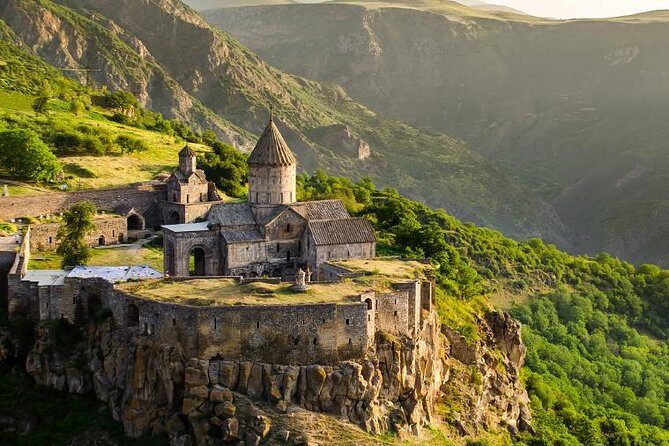
- UNESCO sites included such as Zvartnots, Geghard, and the Lake Sevan monastery region
- Altitude moments like Sevan and the 2,300-meter Amberd fortress are real, so pace yourself
- Yerevan stops with substance: Parajanov art, Erebuni’s Urartian roots, and Vernissage crafts
How the pacing works: Yerevan energy plus monastery days
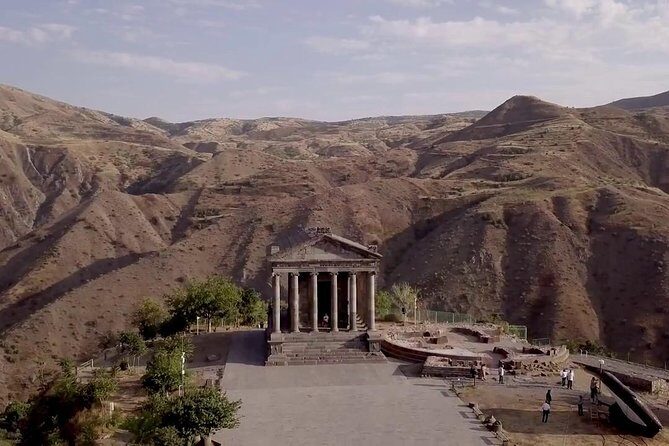
This is a “good legs, good schedule” kind of tour. You’ll spend time walking (Yerevan streets, old-town squares) and time traveling between clusters of sights. The upside is variety: you’re not stuck doing only museums or only religious sites.
You’ll also see a pattern in the stops. Daytime visits often focus on one big theme, then add supporting stops nearby. It’s not random. You’ll get city architecture, then early Christian Armenia, then medieval monastic culture, then the pagan-to-Christian story told through places like Garni and Geghard.
Group size matters here. With a maximum of 30, you’re less likely to feel lost in the shuffle. You can still hear the guide, ask questions, and actually connect the dots between places instead of just collecting stamps.
Other multi-day Armenia package tours we have reviewed in Yerevan
Cascade Complex and ARARAT Museum: Yerevan’s best first impression
You begin with Cascade Complex, the long stairway in front of Yerevan’s Opera House. It’s easy to see why it’s a classic first stop: you’re climbing while the city opens up behind you, and the view from the top gives you a quick map in your head. Even if you’re not into stairs, the overall structure is part of the attraction, with elevators inside and a strong sense of ceremonial Yerevan architecture.
From there, you shift from high viewpoints to a tasting mood at the ARARAT Museum. The focus here is on different aging cognacs, and the setting adds a playful tone to Armenian heritage. It’s a smart contrast after outdoor walking: instead of another stone church, you get something you can experience immediately, in a way that feels local rather than staged.
Then you end the first day with an easy walk along Mesrop Mashtots Avenue, soaking up the look and feel of central Yerevan. This is where you start noticing the city’s rhythm—wide streets, historic facades, and everyday life that doesn’t feel like a museum.
Practical note: wear shoes you can trust. This itinerary mixes viewpoints, uneven terrain at monastic sites, and city walking.
Holy Archangels Church and Zvartnots: early Christianity with UNESCO weight
Day two leans into Armenian Apostolic history, and it does it in a big way.
At Holy Archangels Church, you’re visiting the main religious and administrative center of the Armenian Apostolic Church. The location itself is layered: the church is founded on the site of a pagan temple, and then tied to Gregory the Illuminator’s role in the early 300s. The story continues with St. Hripsime monastery built later in 618 A.D. It’s not just a building. It’s a timeline you can stand inside.
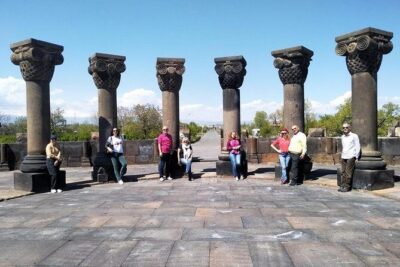
Then you travel to Zvartnots Temple, another heavy hitter. Construction began in 641–643 and stretched intermittently for twenty years. The initiator was Catholicos Nerses III, and the project drew in architects from Dvin, an ancient city also connected to UNESCO World Heritage context. That UNESCO link matters for your understanding: you’re not only seeing a pretty ruin. You’re looking at a landmark tied to how Armenian architecture developed.
What you’ll likely feel: these stops are less about “one photo and done” and more about reading the past on the ground. If you enjoy connecting dates, names, and styles, this day will click.
Lake Sevan and the monastery trio: Sevanavank, Haghartsin, Goshavank
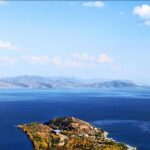
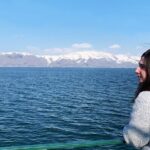
Day three moves toward the “pearl” of Armenia: Lake Sevan. You’re going to hear the line about sweet, astonishingly blue water because the lake’s reputation is earned. Sevan also counts as a high-altitude lake, so you’ll feel it in the air and pace. Bring water, keep your breathing steady, and don’t treat every stop like a sprint.
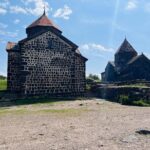
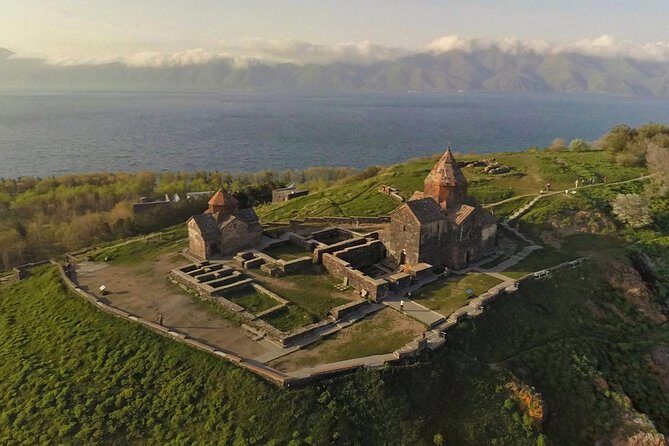
At Sevanavank Monastery, you’re visiting a key monastic site on the lake. It works as a visual reset after earlier city or temple visits. You also get that sense that monasteries here often sit to watch the world, not just serve worship.
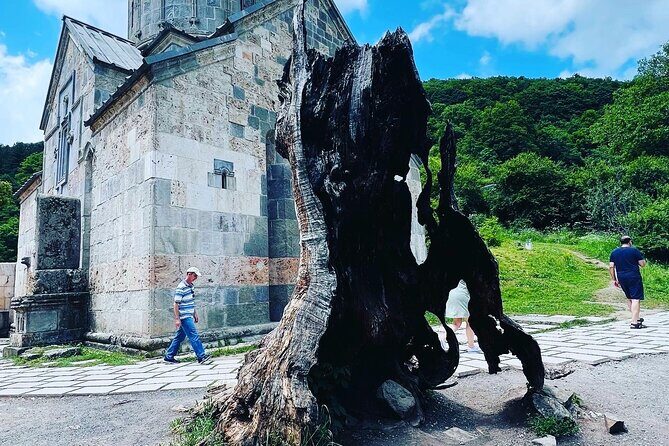
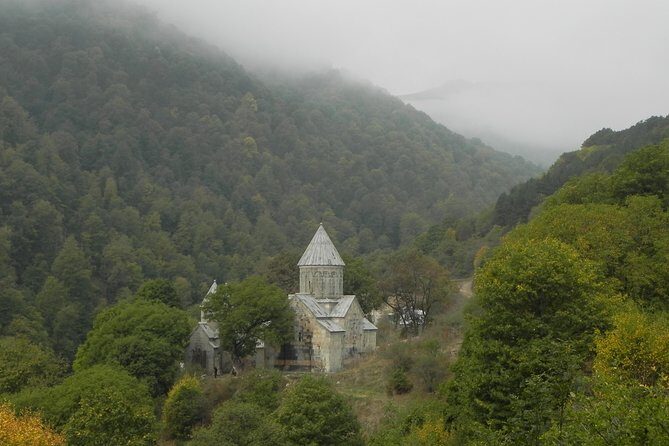
Next comes Haghartsin Monastery. It’s described as a religious and educational center from the 10th–13th centuries, surrounded by the nature around Dilijan. Even if you only have an hour, the setting helps explain why these places lasted. They weren’t isolated only because they were remote. They were meaningful because they fit the land.
Finally, Goshavank Monastery adds the scholarly layer. Goshavank grew into one of the most famous religious and scholarly centers in medieval Armenia, associated with Mkhitar Gosh, a legal expert and scientist (1130–1213). If you like the idea of monasteries as schools, courts, and libraries—not just chapels—this stop lands well.
Gyumri’s old streets and three monasteries with very different moods
Day four brings you into Gyumri, Armenia’s historic city with old houses and colorful stone details. The walking portion helps you understand what “old Gyumri” feels like: architectural solutions that survived the 1988 earthquake, bas-reliefs, and a sense that crafts and daily life shaped the town for generations. The main square visit is not just a square. It’s a jumping-off point for understanding why Gyumri became a cultural center.
Then the itinerary shifts to monasteries along a different architectural track.
Marmashen Monastery is tied to the Ani school of medieval Armenian architecture. It was built between 988 and 1029 and includes five churches, with Marmashen singled out as one of the best surviving examples. That “five churches” detail matters. You’re not seeing one building and leaving; you get a sense of how complex monastic sites could be.
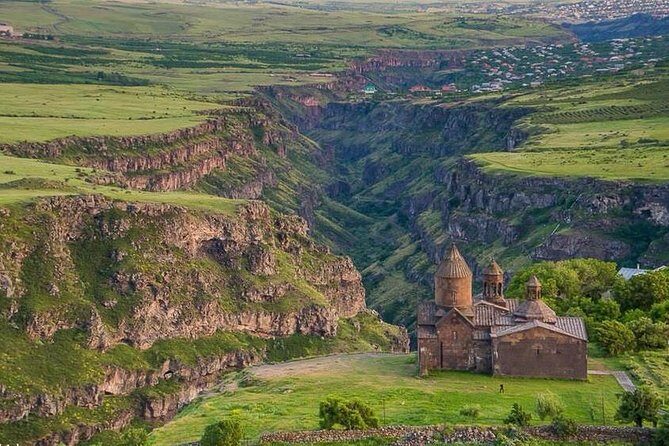
Finally, Harichavank Monastery gives you a dramatic setting on the slopes of Mount Aragats and near a rocky cape. The description includes a 7th-century founding idea, and later building in the 13th century. In the 19th century, it became a summer residence for Catholicoses. But the most memorable detail is the small chapel split from the cape during an earthquake, now towering over the canyon.
If you like architecture that feels shaped by nature and history at the same time, this is one of the most cinematic stops.
A few more Yerevan tours and experiences worth a look
Garni and Geghard: pagan sun views and cave-carved Christianity
Day five is built for contrasts, and they’re the kind you remember.
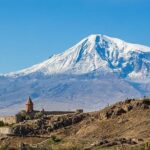
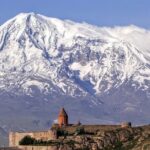
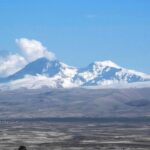
First, there’s Charents Arch, a short stop with a view over the Ararat valley and Mount Ararat. This is your quick “big picture” moment, the kind of place where you understand the geography that sits behind the history.
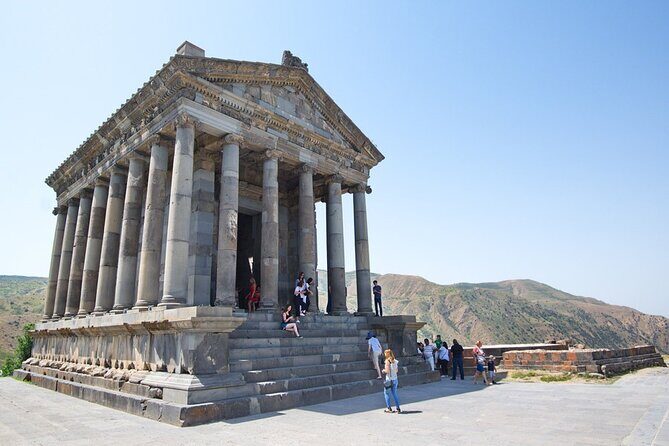
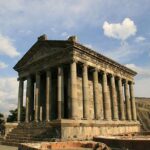
Then you visit Garni Temple, described as the only extant temple in Armenia, dating back to paganism and Hellenism. It was devoted to the sun god Mithra and built by Greek slaves in 76 B.C. You also get the sense of political importance: it served as a summer residence of Armenian kings for over four centuries. That long arc is key. You’re standing in a structure that outlasted eras and kept meaning through time.
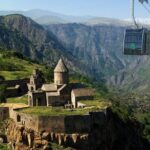
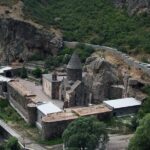
After that, the day slows into one of the most compelling architectural styles on the route: Geghard Monastery. Geghard is a UNESCO World Heritage–linked complex of cave structures in a picturesque valley. It began as Ayri vank, the Cave Monastery, and later became Geghard, meaning lance in Armenian. The name points to the biblical lance story. The monastery’s main church dates to 1215 and is the oldest building in the complex. Avazan Church is carved into solid rock (1283) and is described as an incomparable work of art, with medieval dwellings and khachkars around it.
Why this matters for you: Geghard isn’t only religious. It’s also engineering and storytelling in stone. When you compare this to Garni, you get a sense of how Armenia’s identity shifted and adapted without losing its architectural talent.
Aragats region: colored churches, Ashtarak Bridge, and Amberd at 2,300 meters
Day six is a long sequence of smaller stops, and that can be great if you enjoy building a mental map of a region.
You start at Tsiranavor Church, translated as apricot-colored, a 5th-century partly ruined church at the edge of a gorge. Then you move to Karmravor Church (red-colored), a 7th-century Apostolic church. Next is Spitakavor Church of Ashtarak (white-colored), a partly ruined 13th-century church also at the edge of a gorge. Those color names aren’t just poetic. They help you track each place quickly, especially when you’re visiting multiple churches in one day.
Then comes Ashtarak Bridge, built in 1664 with three arches of unequal size across the Kasagh River. The area underneath and around the bridge is described as a good place for picnics, which gives you something to look forward to beyond just stopping at buildings.
Next you visit Saint Gevorg Church, connected to remains of Saint George and known for numerous frescoes painted in the 17th century. After that, Saghmosavank Monastery adds a sensory detail: it’s famous for acoustics, tied to how Armenian clergy used to sing in the churches.
Then you head to Oshakan village for Saint Mesrop Mashtots Cathedral (1875–1879). This is the burial place of Saint Mesrop Mashtots, credited with creating the Armenian alphabet. It’s a moment of “culture as infrastructure,” where language and identity show up in a place of worship.
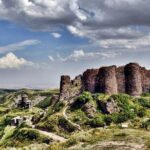
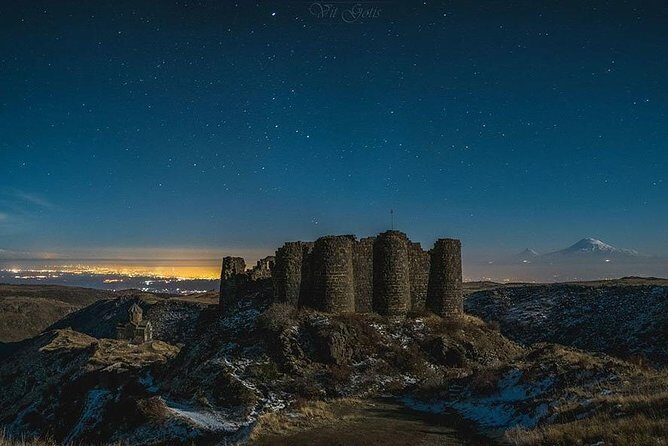
The day ends with Amberd Fortress, a 10th-century fortress at about 2,300 meters above sea level on Mount Aragats slopes. It sits at the confluence of the Arkashen and Amberd rivers. This is where your altitude awareness pays off. Give yourself time, keep your energy steady, and enjoy the fortress viewpoint as the culmination of the day’s history.
Parajanov Museum, Erebuni’s Urartian roots, and Vernissage craft
Day seven brings you back to Yerevan and shifts from stone monuments to Armenian art and city origins.
At the Parajanov Museum, you’re visiting the legacy of the filmmaker Parajanov, described as the greatest Armenian filmmaker. The museum features art works like assemblages, flat and three-dimensional collages, drawings, dolls, and film sketches. This stop is valuable if you’re tired of only religious architecture. It also helps you understand Armenia as a modern creative culture, not just an ancient one.
Next is the Erebuni Museum, focused on the history of Yerevan’s foundation. It stands at the foot of Arin Berd hill, where the Urartian Fortress Erebouni was constructed. You’re connecting present-day Yerevan to deep roots, and the “foundation” framing makes the city feel older than you’d expect.
Finally, you end at Vernissage Market, an open-air market where locals sell handmade works. This isn’t only for souvenirs. It’s a chance to watch how crafts are presented and sold, and to buy small pieces that feel more personal than generic tourist goods.
Price and logistics: what you pay for and what you get
The price is listed at $885.13 per person for about 7 days. That’s not a budget number, but it’s also not a “splurge for one museum” type of cost. For the money, you get an organized route that strings together Yerevan, UNESCO-linked sites, and multiple monasteries and fortresses.
A key value point is that many admissions are included, while a few stops are free (like Cascade Complex and Mesrop Mashtots Avenue). That matters because a week of paid entrances can add up fast when you’re self-planning.
You also get practical support: pickup is offered, the tour is in English, and there’s a mobile ticket. Group size is capped at 30 travelers, which usually makes a meaningful difference in comfort and conversation on day trips.
One more practical detail: the meeting point is described as near public transportation, which can help if you’re arriving in Yerevan and want an easy start or finish.
If you’re trying to minimize risk, note that cancellation is free up to 24 hours in advance for a full refund.
Who should book this Armenia week
This tour is a strong fit if you want a guided path through big historical themes: early Christianity, medieval monastic learning, pagan-to-Christian architecture, and the story of Yerevan’s origins. If you enjoy mixing museums with outdoor sites, you’ll stay interested.
It’s also a good choice if you like the idea of a small-group experience with help from an English-speaking guide, where you don’t have to sort out every entrance and routing detail yourself.
I’d be a little cautious if you hate structure or you need frequent free time. The itinerary is packed by design, and the day-to-day rhythm is all about seeing a lot, not slowing way down.
Should you book this tour, or plan it on your own?
I’d book this if you want to see Armenia efficiently, with guidance that helps you make sense of what you’re standing in front of. The combination of Yerevan stops, UNESCO-linked sites, and a high point like Amberd at 2,300 meters is exactly the kind of “put it together for me” week that guided tours do well.
I’d skip it and self-plan if you only want one or two regions, or if you want more downtime than this schedule allows. In other words: choose it when you want a full story in seven days. Choose something slower when you want a flexible pace.
If your goal is to go home with a clear mental picture of Armenia’s architecture, belief systems, and creative culture, this one makes a lot of sense.
FAQ
How much does the Armenia 7-day tour cost?
The price is listed as $885.13 per person.
How long is the tour?
It lasts about 7 days.
Is pickup offered?
Yes, pickup is offered.
Is the tour in English?
Yes, it is offered in English.
What ticket format do I get?
You receive a mobile ticket.
Are admissions included or free for sites on this tour?
It depends on the stop. Some places are free (such as Cascade Complex and Vernissage), while other stops include admission tickets.
What is the group size limit?
The tour has a maximum of 30 travelers.
What is the cancellation policy?
You can cancel for a full refund up to 24 hours in advance of the experience start time.