REVIEW · YEREVAN
Garni,Geghard, Lake Sevan & Dilijan Monasteries Private Tour
Book on Viator →Operated by Yerani Travel LLC · Bookable on Viator
Ararat views and rock-cut churches in one day. I love the hotel pickup and drop-off (no wrestling with buses) and the air-conditioned comfort for a long 10–11 hour ride. One possible drawback: the Symphony of Stones stop can get swapped or shortened if weather isn’t cooperating.
What makes this day work so well is the way the route tells a story. You’ll connect the Biblical past you get at Charents Arch with the architecture of Geghard and the monastic world around Lake Sevan and Dilijan, all explained in English (and Russian too, if that’s your language). Guides named Anastasia and Tatiana are specifically praised for accurate, clear explanations—so you’re not just sightseeing.
This is also set up as a true private outing for your group, with bottled water and WiFi onboard. If you like a day that’s busy but not chaotic, you’ll probably enjoy the rhythm. Just bring patience for the drive times, because the itinerary is packed.
In This Review
- Key things I’d plan around before you go
- The route that strings together Armenia’s “why”
- Charents Arch: the quick Ararat viewpoint that sets the mood
- Garni Temple (77 A.D.): the pagan site that surprises people
- The Roman bath mosaic: why the details matter
- Symphony of Stones at Garni Gorge: when weather runs the show
- Geghard Monastery: the rock-cut Holy Lance story you’ll remember
- Lake Sevan: the iconic views plus a rare Amenaprkich khachkar
- Haghartsin: “play of the eagle” and a big refectory
- Dilijan’s old street: wooden houses, small-town time
- Goshavank (Gosh-Goshavank): Mkhitar Gosh’s legacy in the woods
- Price and logistics: what $85.70 buys you (and what to ask)
- Who this tour fits best
- Final verdict: should you book this Garni–Geghard–Sevan–Dilijan day?
- FAQ
- How long is the Garni, Geghard, Lake Sevan & Dilijan private tour?
- Do I get hotel pickup and drop-off in Yerevan?
- Is lunch included?
- Are entrance tickets included?
- Which sites will I visit on the day?
- Is the tour private?
- What languages are offered?
- What happens if weather is poor?
- What is the cancellation policy?
Key things I’d plan around before you go
- Pickup + drop-off in Yerevan: you start and end the day without extra transit stress
- Garni’s Roman bath mosaic (30,000 stones): a standout stop when you want more than a church visit
- Symphony of Stones depends on weather: build flexibility into your expectations
- Geghard is the main event: a church carved into solid rock tied to the Holy Lance tradition
- Lake Sevan + Sevanavank: mountain views plus an Amenaprkich (All Savior) khachkar visit
- Dilijan and Goshavank add slower, quieter flavor: older streets and forested monastery settings
The route that strings together Armenia’s “why”
This private tour connects four major zones that travelers often visit separately: the Garni–Geghard corridor, Lake Sevan, and the Dilijan/Goshavank area in the north. Doing it in one day makes sense if your time in Armenia is tight and you want a clean overview of the country’s religious architecture and mountain scenery.
You’ll also spend a lot of the day in an air-conditioned vehicle, which matters. Armenia’s driving between sites can be long, and this is the kind of itinerary where being comfortable on the road pays off.
Because it’s private, the pacing is more human than the big group version. You’re still hitting multiple sites, but it’s only your group in the vehicle—so it feels less like you’re herded and more like you’re being shown the highlights.
Other Garni and Geghard tours we have reviewed in Yerevan

Charents Arch: the quick Ararat viewpoint that sets the mood
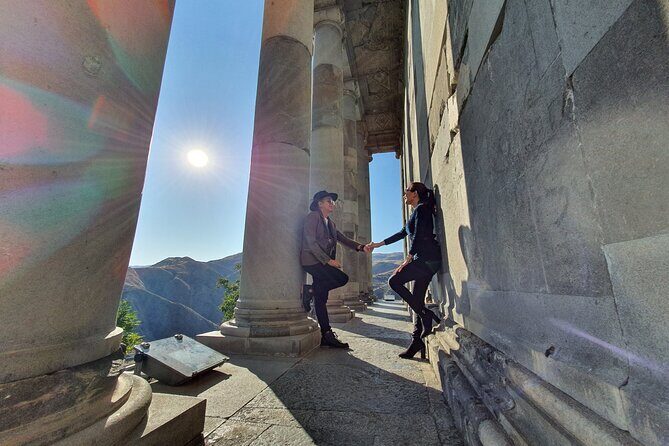
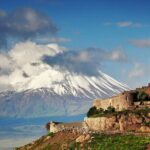
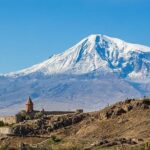
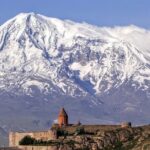
Your first stop is Charents Arch, a short break on the way to the main temple sites. The big draw here is the view of Biblical Mount Ararat. It’s timed for around 20 minutes, so think of it as a fast “get your bearings” moment rather than a long photo session.
Why I like this stop: it gives you a geographic anchor early in the day. Armenia is full of religious history, but Ararat is part of the cultural map too. Starting with that view helps the rest of the itinerary feel connected.
Practical tip: if you’re serious about photos, use this moment to check your camera settings and grab the first good light. Later stops are great too, but this one is short.
Garni Temple (77 A.D.): the pagan site that surprises people
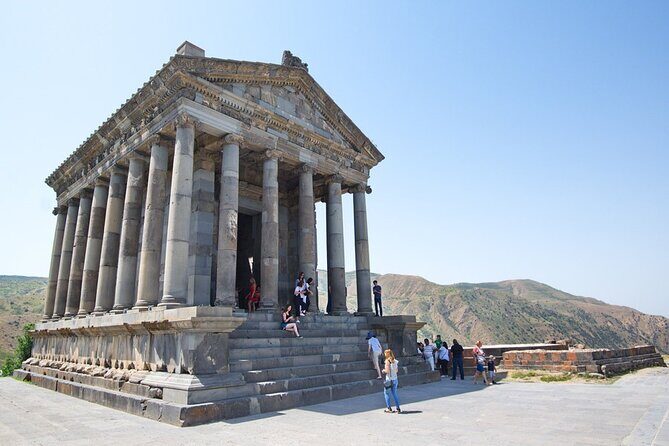
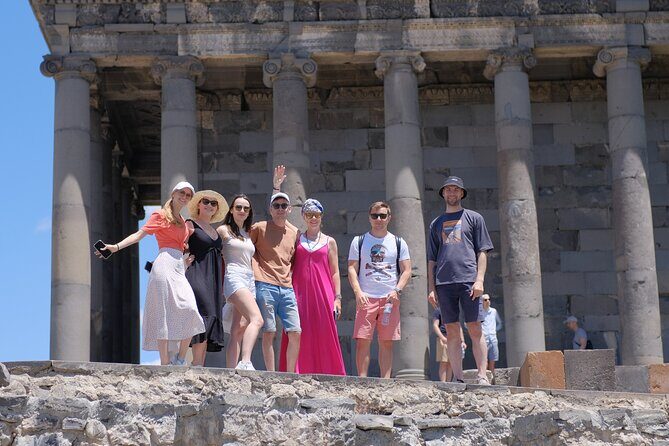
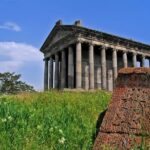
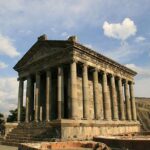
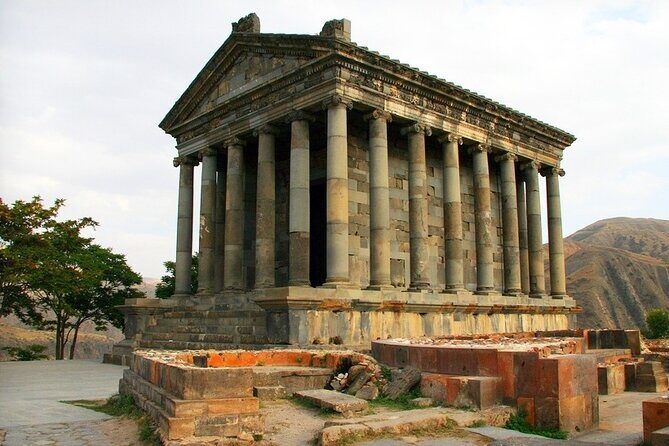
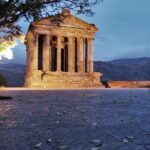
Garni Temple is one of those stops that can completely change your assumptions. It’s the only standing heathen temple in the whole post-Soviet area, and it sits on a high plateau above the Azat river gorge.
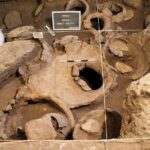
You’ll have about 45 minutes here, which is enough to see the temple, look around the plateau area, and still have time for the Roman bath complex. The bath house is famous for a mosaic made from 30,000 pieces of natural stone. It’s a real craftsmanship flex—quiet but impressive once you start noticing the pattern work.
Garni also includes ruins of a royal palace dating back to the 3rd century A.D. So yes, this is a “temple stop,” but it’s really more like a mini time machine covering multiple eras.
What to watch for: since you’re here partway through a long day, keep your energy for the next switch from ancient ruins to the rock-cut spirituality at Geghard. Garni is cool; Geghard is the heavyweight.
The Roman bath mosaic: why the details matter
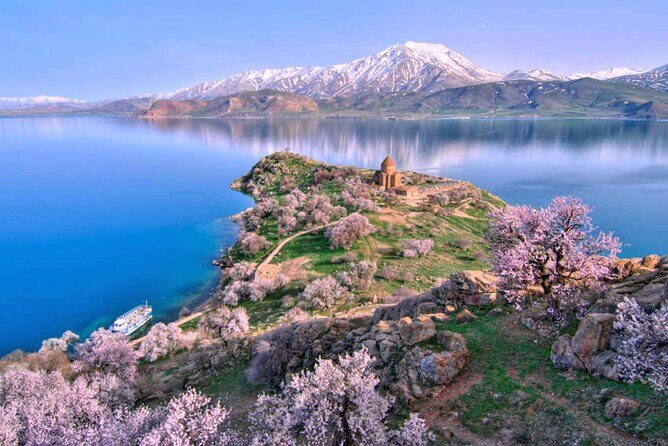
If you only skim Garni Temple, you can miss what makes this stop special. The mosaic at the bath house is the kind of thing that rewards slow looking. With a piece-built design made from 30,000 stone elements, it’s not just decorative—it’s evidence of how serious the Romans were about public spaces.
This is also where a good guide earns their keep. When someone explains how and why the bath complex and temple fit together, you start seeing the site as a system, not two separate attractions.
If you’re the type who likes “architecture as history,” spend the extra few minutes near the mosaic. It’s one of those details that you don’t fully appreciate until you’re there staring at it.
Symphony of Stones at Garni Gorge: when weather runs the show
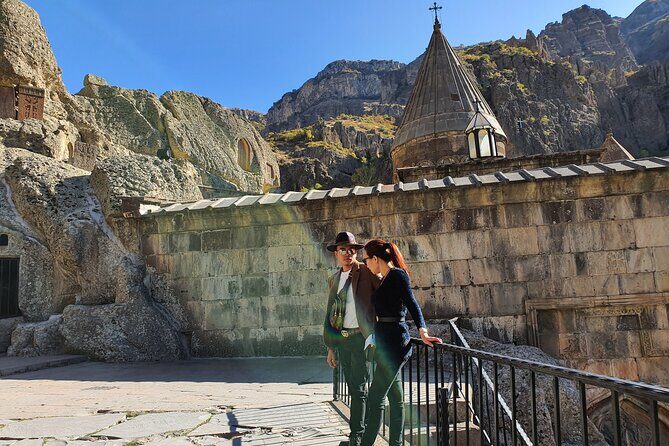
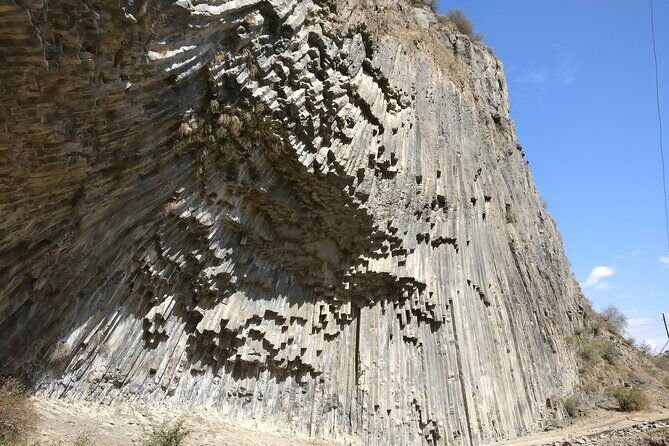
Next comes the Symphony of Stones at Garni Gorge, also known as a place with rock formations that create striking color and shape combinations—hence the musical nickname.
You’ll have around 40 minutes, but the key point is right in the plan: this stop is subject to weather conditions. If clouds roll in, visibility can drop and the colors you’re hoping for won’t land the same way. If conditions are poor, you may find this part gets limited or skipped.
My practical advice: treat this as a “nice if it works” stop, not the core reason to book. The rest of your day still delivers big, especially Geghard and Lake Sevan.
Other Lake Sevan and Sevanavank tours we have reviewed in Yerevan


Geghard Monastery: the rock-cut Holy Lance story you’ll remember
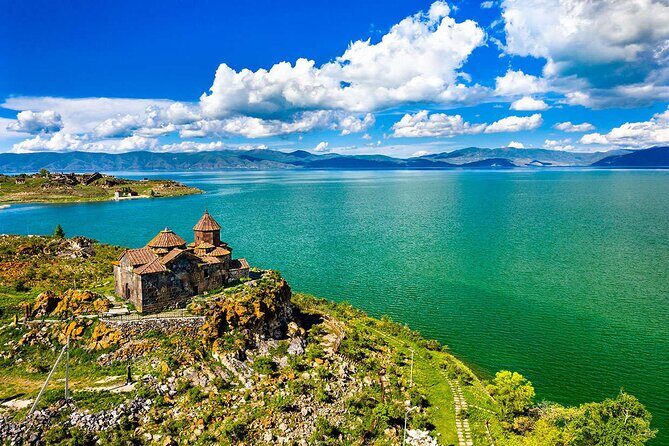
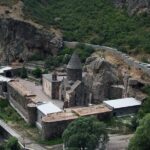
Geghard Monastery is called the Monastery of the Holy Lance in English, and the name isn’t just a nickname—it ties to the lance that tradition says Longinus used to pierce Jesus. The tradition is that this relic was brought to Armenia and kept at Geghard for five centuries.
What makes Geghard architecturally special is the church carved into solid rock. This is where you see Armenian church rules applied in a way that feels almost impossible: the builders cut the sacred space directly into the geology. It’s often the moment where people start understanding why Armenian architecture has such a reputation.
You’ll get about 40 minutes here. That’s enough time to walk through the main complex areas and take in the rock-cut details without feeling rushed—assuming you don’t spend that entire time waiting for the perfect “no people in the frame” photo.
One more thing: Geghard is not just about a single building. It’s a monastic complex that reads like 13th-century Armenia’s architectural golden age in stone form. If you like churches with context, this stop delivers.
Lake Sevan: the iconic views plus a rare Amenaprkich khachkar
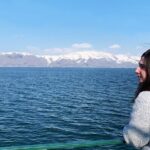
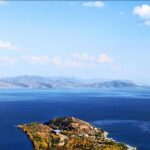
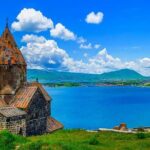
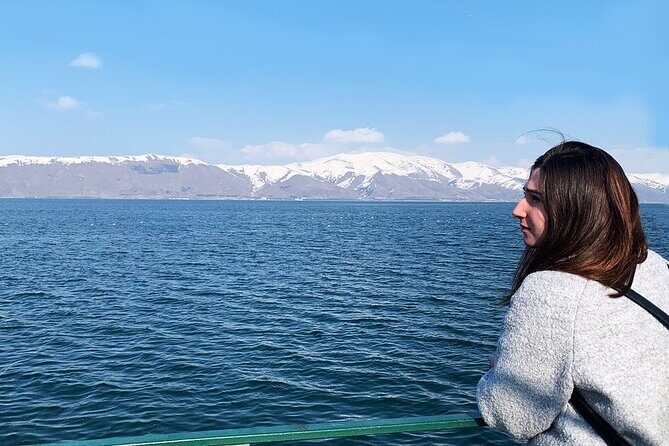
Lake Sevan is the kind of landmark that earns its fame. You’ll head up to the Sevan Peninsula, and you should expect panoramic views from the summit area. The day turns scenic in a big way here.
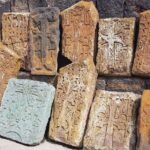
You’ll have about 1 hour. During that time you can explore Sevanavank Monastery, including its Amenaprkich (All Savior) khachkar. The specific khachkar here is described as one of the 13 rarest in Armenia, depicting Jesus in a particularly beautiful way.
This is a smart stop to include because it gives you:
- a major natural site (Lake Sevan at about 1,900 meters elevation),
- and a major cultural artifact (a rare khachkar) tied to Armenian Christian art.
What to plan for: Sevan is high and views are open, so dress for changing weather even if Yerevan is warm. And if you’re prone to slipping around on uneven surfaces, go slow on the areas around viewpoints.
Haghartsin: “play of the eagle” and a big refectory
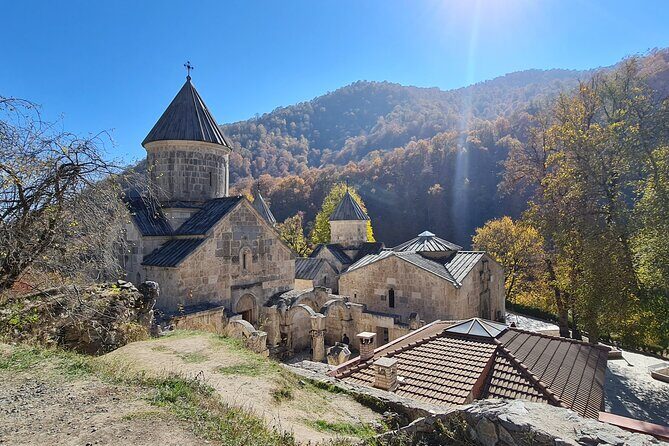
Haghartsin Monastery comes next, and it’s where the day starts feeling calmer. The monastery dates from the 10th to 14th centuries, and its name translates to the play of the eagle.
You’ll have about 30 minutes. The scenery is part of the attraction, with the monastery and the surrounding nature working together. This is also a stop for architecture fans: the refectory of Haghartsin is considered the biggest among Armenian church architecture, and it was described as an innovation of its time.
If you’ve been focused on temples and rock-carved churches, this is a nice shift. It’s still religious heritage, but the feel is more “monastery tucked into its setting,” not just a dramatic structure.
Dilijan’s old street: wooden houses, small-town time
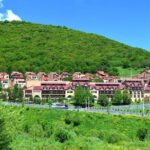
Dilijan is often called the Switzerland of Armenia because of its natural beauty. Here you’ll do a quick walk along the oldest street, Sharambeyan.
You get about 25 minutes. The goal isn’t to do a deep ethnographic study of Dilijan—it’s to sample the atmosphere: wooden houses, many dating back to the 19th century, and a feeling of a town that’s been there awhile.
This stop works especially well after monasteries, because you get a human-scale break. You can reset your legs, grab water, and enjoy the town’s texture before the final monastery push.
Goshavank (Gosh-Goshavank): Mkhitar Gosh’s legacy in the woods
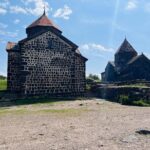
The last major religious stop is Goshavank, also called Gosh-Goshavank, located in the north of Armenia in a village setting tied to the monastery.
You’ll visit for about 30 minutes. This is a place where intellectual history meets church history. Mkhitar Gosh is described as one of the great intellectual powers of his day, authoring many works, including the first code of civil and Canon law used in Greater Armenia and Cilicia. He’s buried near the church he built in 1188.
There’s also a khachkar highlight: Pavghos’s (Poghos) khachkar is described as the most beautiful embroidered khachkar in Armenia.
If your brain is tired from matching dates and names at each site, Goshavank is a good place to slow down. The story here has a “why it mattered” feeling because it connects the monastery to law and writing, not only worship.
Price and logistics: what $85.70 buys you (and what to ask)
At $85.70 per person for a 10 to 11 hour private day, the value is mostly about what you avoid:
- you avoid planning multiple transport hops yourself,
- you avoid juggling tickets across sites,
- you get a dedicated vehicle with WiFi onboard, bottled water, and air conditioning.
That said, it’s not a fully all-inclusive ticket package. Entrance tickets are not listed as included overall, and the Symphony of Stones admission is specifically not included. Garni Temple has admission included, while several other stops are listed as free (Charents Arch, Geghard, Lake Sevan/Sevanavank, Haghartsin, Dilijan, and Goshavank).
Also note the optional pieces:
- Lunch is not included (available upon request).
- A professional guide is listed as upon request.
So here’s the smart move: before you go, ask what level of guiding you’ll have in English and whether you should request the professional guide add-on for the depth you want. The difference between a quick tour script and a truly explanatory guide is big on a day with architecture details like Geghard and khachkars at Lake Sevan.
Comfort checklist for a day like this:
- Bring a light jacket even if it’s warm in Yerevan.
- Wear shoes that handle uneven monastery ground.
- Plan for a few photo stops that are shorter than you want, because the whole day is scheduled.
Who this tour fits best
This is ideal if you:
- want a single-day overview of Armenia’s major Christian sites and top natural views,
- like history explained in plain language while you walk,
- prefer the ease of hotel pickup and drop-off over DIY transport.
It’s also a good choice for families, since most travelers can participate and children must be with an adult.
If you’re the type who wants a super slow travel pace with long stays inside museums or villages, you might feel the schedule. This is a “see a lot, understand the highlights” day.
Final verdict: should you book this Garni–Geghard–Sevan–Dilijan day?
Yes, I think it’s a strong booking for most first-timers—mainly because the itinerary hits the big hitters without turning into chaos. Garni adds an unexpected ancient layer with the Roman bath mosaic. Geghard is the religious architecture anchor. Lake Sevan gives you the landmark effect, and Dilijan plus Goshavank add variety beyond churches.
If you can be flexible about weather (especially for Symphony of Stones), you’ll be set up for a memorable day. If you hate schedules and prefer slow wandering only, then you may want fewer stops on another day.
FAQ
How long is the Garni, Geghard, Lake Sevan & Dilijan private tour?
It runs about 10 to 11 hours.
Do I get hotel pickup and drop-off in Yerevan?
Yes. Hotel pickup and drop-off are included.
Is lunch included?
No. Lunch is not included, but it’s available upon request.
Are entrance tickets included?
Entrance tickets are not generally included. Garni Temple admission is included, while other sites listed as free don’t require tickets. Symphony of Stones admission is not included.
Which sites will I visit on the day?
You’ll stop at Charents Arch, Garni Temple, Symphony of Stones (weather-dependent), Geghard Monastery, Lake Sevan/Sevanavank Monastery, Haghartsin Monastery, Dilijan, and Goshavank Monastery.
Is the tour private?
Yes. It’s a private tour/activity, so only your group participates.
What languages are offered?
The tour is offered in English and Russian (other languages may be possible with price changes).
What happens if weather is poor?
The tour requires good weather. If it’s canceled due to poor weather, you’ll be offered a different date or a full refund.
What is the cancellation policy?
Free cancellation is available up to 24 hours in advance for a full refund. If you cancel less than 24 hours before the start time, the amount paid is not refunded.