REVIEW · YEREVAN
Soviet Yerevan: Small-Group City Experience
Book on Viator →Operated by Envoy Tours · Bookable on Viator
Soviet Yerevan has a punch of weird charm. In four hours, you track the city’s Soviet-era pulse from big ceremonial squares to everyday neighborhoods, using public transport the way locals do. It’s a small-group tour with an English guide and real stops you can see and taste.
I especially liked two things. First, the storytelling from the guide, including Marine’s personal touches and Soviet jokes that make the politics feel human. Second, the food: you try market snacks like perashki and ponchik, plus the chance to taste Soviet-style ice cream.
One thing to keep in mind: you’ll spend time standing and walking at photo stops, and the route reaches the city’s edges, so don’t expect a slow stroll with long sitting breaks.
In This Review
- Key takeaways before you go
- Soviet Yerevan’s real theme: people, routines, and place
- Republic Square and the shift from Lenin Square
- Sasuntsi Davit Street metro: Soviet infrastructure you can still ride
- Malatia-Sebastia and the market snacks called in from real life
- Beknazarian Street and the CCCP apartment blocks
- The Children’s Railway by the Hrazdan: a 1937 time capsule
- How the transport plan makes the 4 hours feel doable
- Price and value: $65 for a focused half-day
- Getting your day right: meeting points, timing, and what to expect
- Should you book Soviet Yerevan?
- FAQ
- FAQ
- How long is the Soviet Yerevan small-group tour?
- What does the tour cost?
- Is the tour in English?
- What is the group size limit?
- What are the main stops on the route?
- Are tickets and admissions included?
- What food is included?
- How does transportation work during the tour?
- Where do I meet and where does it end?
- What is the cancellation policy?
Key takeaways before you go
- Marine’s style of history keeps the story moving with personal context, not just dates and names
- Metro + Soviet-style van means you see more of Yerevan without turning it into a long walking day
- Market time for Malatia-Sebastia brings you into how people shop, not just how monuments look
- CCCP-era apartment blocks on Beknazarian Street give you the “where people lived” angle
- The Children’s Railway really matters because a 1937 station building and locomotive are still there
Soviet Yerevan’s real theme: people, routines, and place
This tour works because it treats Soviet Yerevan like a living system. Yes, you’ll see iconic references to Lenin-era symbolism, but the best moments are about daily life: how people moved around, what they ate, and what the built environment asked of them.
The format helps, too. It’s about four hours with a maximum of six people, so questions land fast and the pace stays sensible. You’re on foot for several sections, but the metro ride and the Soviet-style van keep the day from getting heavy.
And the practical part matters. You get a mobile ticket, the tour runs in English, and the day is structured by timed stops, so you know what to expect.
Other Yerevan city tours we have reviewed in Yerevan
Republic Square and the shift from Lenin Square
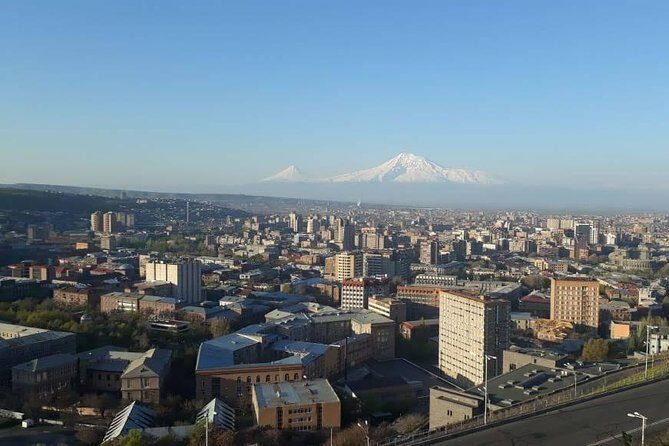
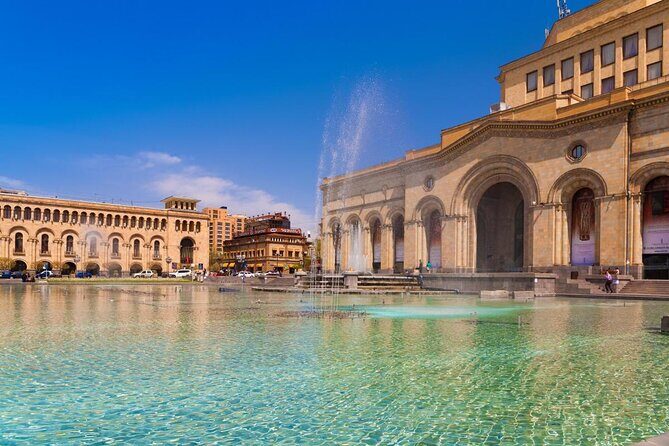
You start at Republic Square, the grand heart of Yerevan. During the Soviet period it was called Lenin Square, and it once had a Vladimir Lenin statue. The tour points out what changed after Armenia’s independence, including that the statue was removed and the square was renamed.
This stop is short, about 15 minutes, but it’s a smart primer. It gives you a baseline for reading what you see later. Soviet cities often used massive central plazas for parades and celebrations, and this is where that whole idea becomes visible.
The square also has a timeline built into it. Soviet celebrations happened twice a year, and originally even thrice, lasting until 1988. So even if you’re only catching the square for a moment, you’re looking at a place that once ran on scheduled public ritual.
Sasuntsi Davit Street metro: Soviet infrastructure you can still ride
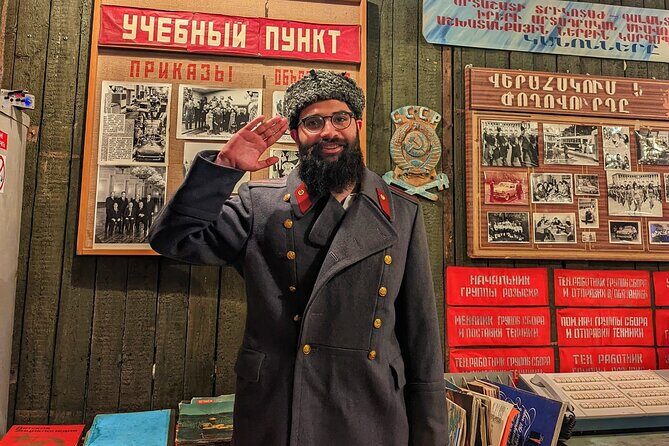
Next is Sasuntsi Davit Street, one of Yerevan’s original metro stations. It opened to the public on 7 March 1981, and the tour explains how it connects to nearby infrastructure. There’s a pedestrian tunnel linking it to the adjacent Yerevan railway station.
The name connects to a statue outside the railway station: David of Sassoun. The point isn’t just trivia. It’s showing how Soviet-era transport projects sat alongside older cultural landmarks, so the city reads as a mix, not a one-note story.
You get about 35 minutes here, and it’s a good amount of time for both orientation and photos. The station is also a reminder that Soviet design wasn’t only about monuments—it was about moving workers and families efficiently through the day.
Potential drawback for this stop: if you’re expecting lots of museum-style exhibits, you won’t get that. It’s more about the station’s place in the system and what that system meant.
Malatia-Sebastia and the market snacks called in from real life
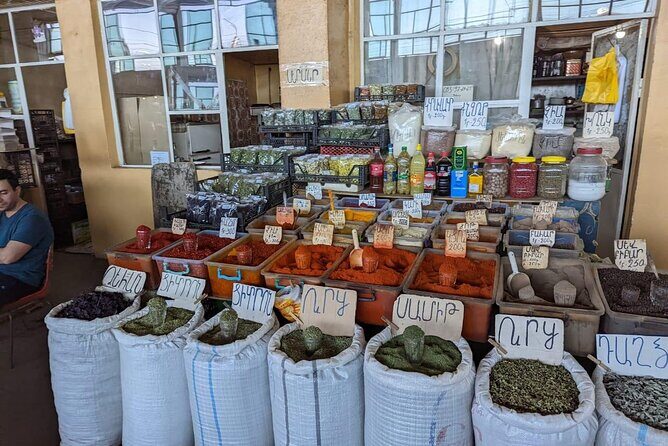
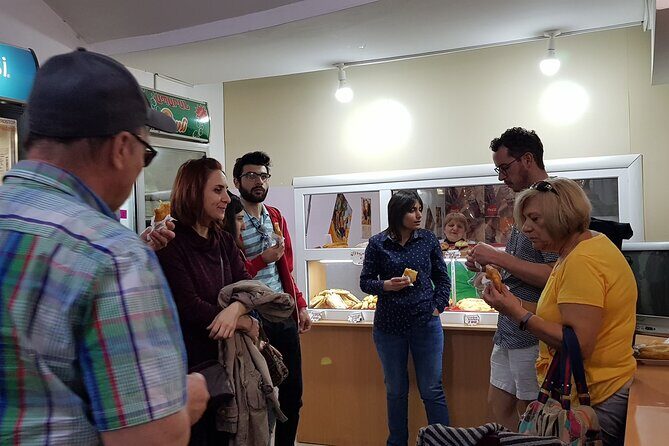
After transit and city structures, the tour shifts gears to food and street commerce in Malatia-Sebastia. You’ll spend around an hour exploring this market area, including sampling local famous snacks.
The tour also focuses on the name Bangladesh for this section of Malatia-Sebastia. You don’t need a background reading packet to enjoy this part. What matters is that the guide uses the neighborhood’s market identity to explain how people socialize, trade, and survive in a place that keeps changing.
You’ll try perashki and ponchik, which are central to the market vibe. And because this is where you can smell and taste what’s happening, it’s one of the easiest stops to remember later.
Practical tip: keep an eye on your appetite here. If you eat lightly at the start, you’ll feel better about trying everything offered without feeling stuffed before the tour is over.
Beknazarian Street and the CCCP apartment blocks
Beknazarian Street gives you a look at what Soviet planning did at the block level. This is tied to the CCCP (USSR) district vibe, with apartment buildings built to house the proletariat.
The guide walks you through what people often miss: the story behind the last buildings constructed in Soviet times. Instead of treating the architecture as background noise, you learn why the timing and design mattered.
You also get about 30 minutes here, which is enough to take photos while still getting the key context. And yes, there’s food again: you’ll taste even delicious Soviet ice cream. It’s a small detail, but it works because it turns ideology into something you can literally put in your mouth.
One consideration for this stop: street-view Soviet apartment blocks can feel repetitive if you’re only chasing big dramatic landmarks. The value here is in the explanation and the contrast between what looks plain and what actually carries a lot of meaning.
Other city tours we've reviewed in Yerevan

The Children’s Railway by the Hrazdan: a 1937 time capsule
The final major stop is the Children’s Railway, set between the Hrazdan river and the Hrazdan water canal. This is one of the many children’s railways that existed across the USSR and kept functioning after the breakup.
It was built in 1937, and what makes this stop special is that parts of the original setup are still intact. The original main station building and the first 1937 locomotive remain, and the tour frames them as a kind of living tribute to nearly a century of rail dreams.
You’ll spend about 40 minutes here, and it’s a fun counterbalance to the political story you’ve heard earlier. The guide also connects the railway to why it mattered for kids: it was a place to learn about trains and feel motivated, not just a ride for fun.
This stop is also where the day feels most “Armenia today,” not just a look back. You’re looking at a Soviet-era idea that didn’t fully disappear—it adapted, kept running, and stayed in the city’s routine.
If you’re photographing, come ready for rail textures: old station details, track views, and the sense of time packed into a small footprint.
How the transport plan makes the 4 hours feel doable
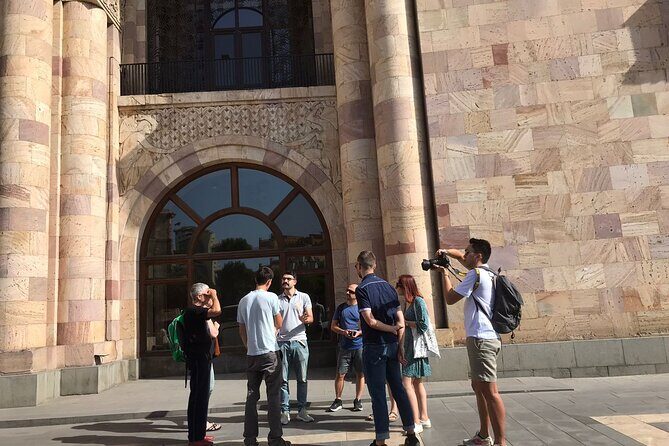
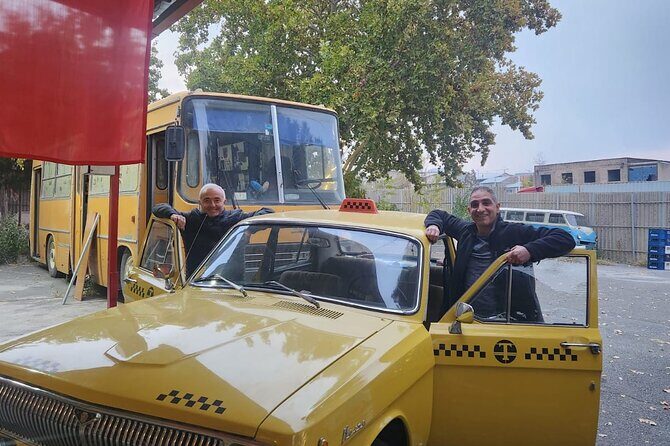
The tour uses public transportation, including a metro ride, plus a Soviet-style van between sections. That combo is the secret sauce in a city where the story isn’t only in one central zone.
You’re not stuck doing a single long walk. You’re also not only sitting in a car. The day mixes short walks with rides so you can keep your energy for the market and the railway.
Group size is capped at six, so you don’t get the slow squeeze of a bigger crowd. On a timed tour, that matters.
Price and value: $65 for a focused half-day
At $65.00 per person for about four hours, the value depends on what you want. If you came to Yerevan for Soviet texture, not just a few photos, this is a fair deal.
Here’s why it can feel worth it:
- You get a local guide and guided narration throughout
- You get snacks included (at least perashki and ponchik, plus Soviet-style ice cream)
- You get a public-transport metro ride and a Soviet-style van
Also, the tour includes admission for the Children’s Railway stop. That’s not always the case on short thematic tours, and it’s one more reason you feel like you’re paying for access, not just explanation.
If your priority is purely high-impact monuments, you might question the value. But if you like seeing how the Soviet period shaped everyday places—transit, housing, markets, and play—then the price lands in a good zone.
Getting your day right: meeting points, timing, and what to expect
You meet at Ministry of Foreign Affairs, Government House #2, Republic Square, Yerevan 0010. The day ends at Diana Abgar Park, near Arami poghots (the tour provides a map pin for 5GM5+74G).
It’s scheduled under stated opening hours that include Monday 10:00 AM–2:00 PM. Since the tour is about four hours, the timing window is something to check closely after booking so you’re not surprised by the start time.
Bring comfortable shoes. You’re walking several blocks and standing at stops for context and photos. Also, come ready to eat. Snacks are part of the tour design, not a random bonus.
Language is English, and confirmation is received at booking unless you’re booking close to departure. In the typical case, you’ll get confirmation when you book, and if you’re within two days, you receive it within 48 hours subject to availability.
Should you book Soviet Yerevan?
I’d book it if you want more than a monuments-only Soviet tour. This is a city-explainer format. You leave with a better sense of how Soviet systems showed up in everyday life: metro lines, housing districts, market identities, and even children’s trains.
I’d skip it if your Soviet interest is narrow and you only want the biggest headline symbols. The tour spreads the story across places that aren’t all famous from afar, and you’ll get the most if you like connecting small details to a larger picture.
Best fit: people who enjoy guided walking mixed with real local experiences—especially food—and who don’t mind standing for short photo moments.
FAQ
FAQ
How long is the Soviet Yerevan small-group tour?
It’s about 4 hours.
What does the tour cost?
The price is $65.00 per person.
Is the tour in English?
Yes, it’s offered in English.
What is the group size limit?
The tour has a maximum of 6 travelers.
What are the main stops on the route?
Key stops include Republic Square, the Sasuntsi Davit Street metro area, Malatia-Sebastia market, Beknazarian Street (CCCP district), and the Children’s Railway.
Are tickets and admissions included?
The Republic Square and metro station stops have free admission. The Children’s Railway admission is included.
What food is included?
You’ll sample local snacks at the market, including perashki and ponchik, and you’ll also get Soviet ice cream.
How does transportation work during the tour?
You use public transportation, including a metro ride, plus a Soviet-style van as part of the plan.
Where do I meet and where does it end?
You start at Ministry of Foreign Affairs, Government House #2, Republic Square, Yerevan 0010. The tour ends at Diana Abgar Park (near Arami poghots), with a provided map location.
What is the cancellation policy?
You can cancel for free up to 24 hours in advance for a full refund.