REVIEW · YEREVAN
Private tour to Garni Temple, Geghard Monastery, Tsaghkadzor, Kecharis Monastery
Book on Viator →Operated by Jan Armenia Tours · Bookable on Viator
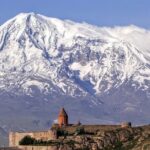
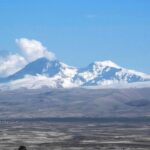
Ararat shows up fast on this route. This private day links Garni Temple and the UNESCO cave monastery of Geghard with Tsaghkadzor’s mountain-town vibe, plus quick stops built for great photos.
I especially like the way the pacing keeps you moving without feeling rushed, and how the stops stack together geographically so you spend less time staring out the window. I also like the practical feel of the logistics: pickup and drop-off in Yerevan, an air-conditioned vehicle, WiFi onboard, and bottled water to keep the day comfortable.
One thing to plan for: several major sights and scenery add-ons have separate entrance fees (Garni Temple, Symphony of Stones, and the Tsaghkadzor ropeway if you choose it), and lunch is not included—so your wallet and stomach need a little prep.
In This Review
- Key points to know before you go
- The big idea: why this day works so well from Yerevan
- Charents Arch: the Ararat view stop that feels bigger than it looks
- Garni Temple: Roman-era ruins with earthquake drama
- Geghard Monastery: the cave monastery that feels built for silence
- Tsaghkadzor: Gorge of Flowers, ski town energy, and cure-climate fame
- Kecharis Monastery: St. Gregory and a complex that took centuries
- The driver, the guide, and how the day stays on schedule
- Price and value: $110 per group up to 3, and what you still pay separately
- What to expect at each step of the day (and where time really goes)
- Tips that make this day smoother in real life
- Who this private Garni–Geghard–Tsaghkadzor–Kecharis tour suits best
- Should you book it?
- FAQ
- Is the tour really private?
- How long does the tour last?
- Does the tour include pickup from my hotel?
- Are entrance tickets included for all stops?
- What language is the guide service offered in?
- Do I need any specific fitness level?
- Can I cancel for a full refund?
Key points to know before you go
- Charents Arch is a payoff stop: walk onto the inner platform for a big Ararat panorama.
- Geghard is carved, not built on top: the whole feel is about the cave setting and the spring origin.
- Garni mixes Roman ruins with Armenian layers: pagan temple, then a Christian summer residence, then earthquake history.
- Tsaghkadzor is more than a viewpoint town: it’s known as a ski and “curative climate” resort.
- Kecharis adds quiet monastery architecture: St. Gregory and the complex details make it worth the drive.
- Private means smoother timing: your group stays together, and the plan can flex around your pace.
The big idea: why this day works so well from Yerevan
This is the kind of Armenia day trip that feels efficient in the best way. You’re not bouncing across the country. You’re moving through a tight geographic arc where each stop tells a different story: pagan Armenia at Garni, medieval Christian devotion at Geghard, then mountain resort life at Tsaghkadzor, and finally more monastery calm at Kecharis.
The private format matters. With a group size up to 3, you’re not fighting for space, and you can spend a little extra time where you care most: inside Geghard’s cave church spaces, around Garni’s stone fragments, or outside for mountain views.
The route also gives you a built-in photography strategy. You get a quick, high-reward panorama at Charents Arch early-ish, then you move into architecture-heavy stops where the light shifts nicely across the day.
Other Garni and Geghard tours we have reviewed in Yerevan

Charents Arch: the Ararat view stop that feels bigger than it looks
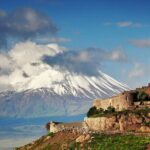
Charents Arch is one of those places where first impressions can trick you. From the outside, it can seem like a simple arch in the landscape. Then you step inside onto the platform, and the view changes the game.
This is where I’d tell you to slow down. Take a few minutes to position yourself inside the arch opening—this is the “panorama moment” built into the experience. It’s also close enough to the Garni–Geghard corridor that it doesn’t add much travel time, while it still delivers one of the day’s strongest visual rewards.
Practical note: you’re there for about 20 minutes. That’s short, but it’s not rushed if you show up ready with your camera (or phone) and you’re willing to wait for the right angle.
Garni Temple: Roman-era ruins with earthquake drama
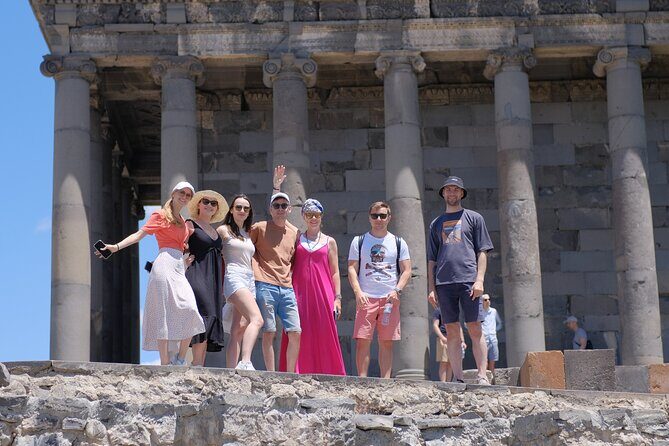
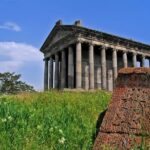
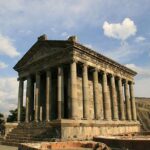
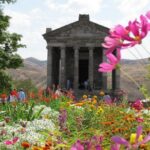
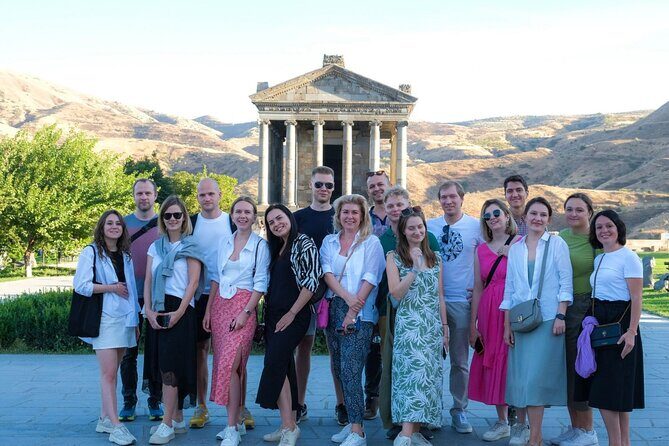
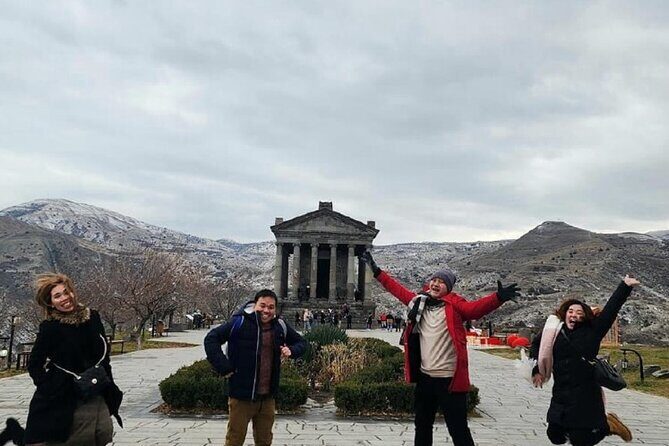
Garni Temple is the only pagan temple preserved on Armenian soil. It was built in the second half of the 1st century by King Trdat III, which already sets up a fascinating contrast with the rest of the day. After Christianity took hold, the site became the summer residence of Khosrovadukht, Trdat III’s sister—so the story changes even though the stones remain.
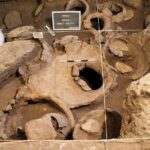
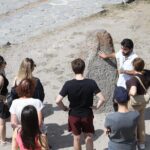
What you’ll see today isn’t a whole, intact building. An earthquake destroyed the temple in 1679, leaving fragments of columns and wall stones spread around the area. That makes Garni feel more human than “perfect.” It’s a ruin you can actually read like a timeline.
A detail worth knowing before you go: it’s thought the temple was dedicated to Mithra, the God of the Sun. Even if you don’t go deep on ancient religion, it helps you look at the structure with intention—especially the way the architecture relates to light and time of day.
Garni’s time on the plan is around 2 hours, and the entrance fee is not included. If you want to keep the flow smooth, it’s smart to buy your Garni tickets from the office rather than waiting at the entrance during busy periods. That small choice can save you a chunk of time.
Geghard Monastery: the cave monastery that feels built for silence
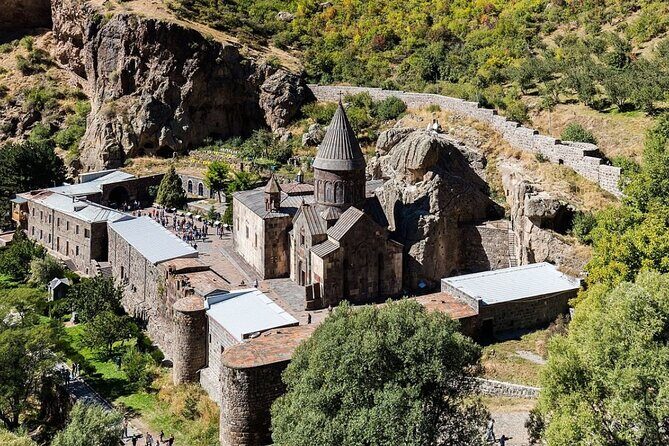
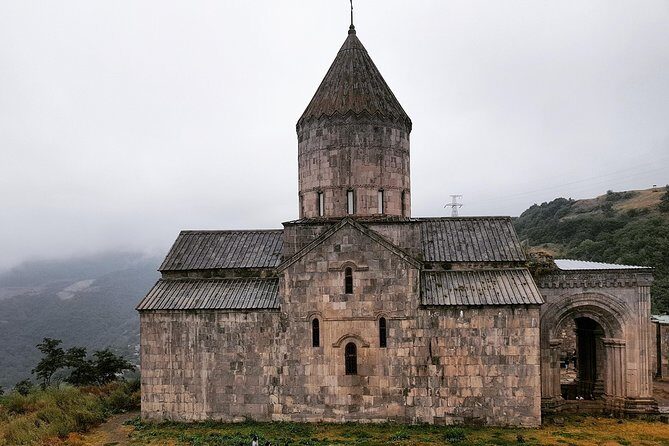
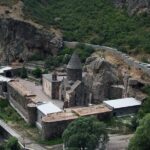
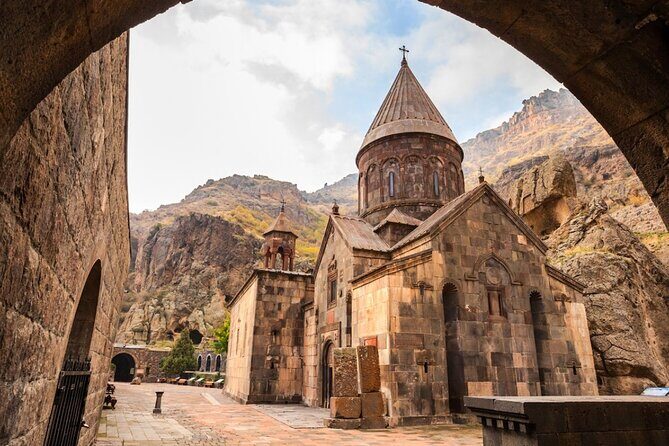
If Garni is about ruined grandeur, Geghard is about sacred space. Geghard Monastery is a major medieval architectural complex in Armenia, and the defining feature is simple: it’s completely hollowed out in a cave. It’s also tied to a real sacred spring that originates in the cave.
The monastery complex was founded in the 4th century AD at that spring location. That matters because it explains why the place feels spiritually grounded rather than just “impressive architecture.” You’re not only looking at buildings; you’re in a setting with an origin story.
The name Geghard (spear) connects to Christian legend: it refers to the Langin’n spear that pierced the body of Jesus Christ on the cross. The spear itself is kept in the museum of Etchmiadzin. Knowing that link gives you context when you’re inside Geghard’s spaces, even if your visit is more visual than theological.
Geghard is on the UNESCO World Heritage List, and the UNESCO label is there for a reason: the combination of cave construction, medieval architecture, and the continuing sense of sacred continuity is rare.
The tour time here is about 2 hours, and the admission ticket is free based on the tour info. Still, plan for some walking inside and around cave-carved areas. The setup is not “museum flat,” and you should have moderate physical comfort for uneven ground and steps.
Tsaghkadzor: Gorge of Flowers, ski town energy, and cure-climate fame
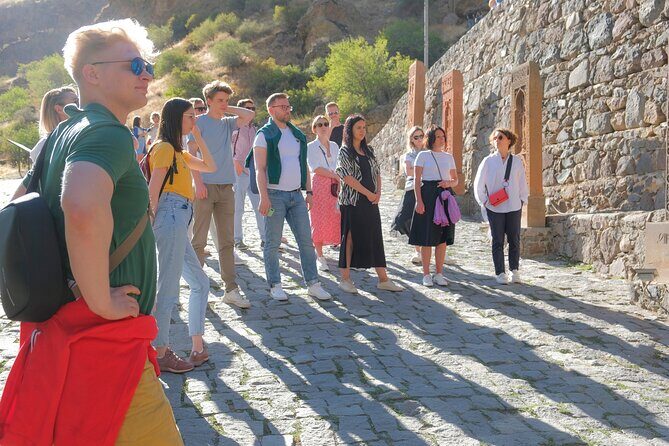
Then you shift gears. Tsaghkadzor is a cozy town in Kotayk province and a popular ski and climatic resort. The name translates as “Gorge of Flowers,” and the region’s curative climate reputation goes way back—already known in the 5th century BC.
So yes, it’s a place for snow seasons, but it’s also a place for fresh air and big mountain views. Even if you’re not skiing, the town’s resort identity shapes what you’ll feel: a calmer pace than Yerevan, and a clearer sense that the mountains are the main character.
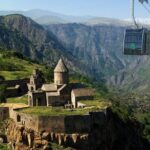
In this tour format, Tsaghkadzor can include the ropeway/sky-lift add-on. The ropeway entrance fee is not included, so you’ll want to budget for it if you decide to ride up for views.
Two practical tips here:
- If you care about photos, keep an eye on cloud cover. Ropeway views can change fast depending on weather.
- Since lunch isn’t included, Tsaghkadzor is a good place to plan a meal stop or snacks so you don’t start the second half of the day hungry.
Other Tsaghkadzor and Kecharis tours we have reviewed in Yerevan

Kecharis Monastery: St. Gregory and a complex that took centuries
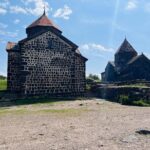
Kecharis Monastery is located in the northwestern part of Tsaghkadzor, and it adds a strong “finish the day with something quieter” note. The complex was erected in the 11th century, and during the 12th–13th centuries it was considered a major cult center of Armenia with a higher school.
That education angle is one reason Kecharis feels different from a simple church visit. You’re looking at a complex that wasn’t just religious—it was a place for learning and authority.
The layout is also worth noticing: the complex consists of three churches, two chapels, and a porch, plus another church with its porch to the west of which, another church with its porch. It’s structured like a thoughtful town of worship buildings, not a single standalone monument.
The main temple is the Church of St. Gregory. One specific date you can hold onto: it was the first building erected by Grigor Magistros Pahlavuni in 1003. That gives the site a clear anchor inside its longer construction story.
Time on Kecharis is listed in the tour info in two ways (around 30 minutes in one place, and around 2 hours in another). So plan for flexibility. If you’re the type who likes to wander and take photos, you’ll probably want the longer end. If you prefer a focused route and move on, the shorter end will still get you the essentials.
Admission is listed as free for Kecharis, which makes it one of the best “value per minute” stops in the day.
The driver, the guide, and how the day stays on schedule
This is a private tour with pickup and drop-off in Yerevan, and it runs for about 8 hours. That’s a full day, but the structure helps: the car moves you between sites, and you don’t spend your energy figuring out transport or timing.
The vehicle is air-conditioned, and it includes WiFi onboard plus bottled water. Those sound like small details, but in a day packed with walking and sightseeing, they help you stay comfortable.
Guide service is optional, and the tour offers English or Russian. In the experience reviews tied to this provider, names like David (driver), Nelly (tour officer), and Ike (guide) come up with praise for being attentive, professional, and friendly. Even if you don’t get the same people, it’s a good sign that the company tends to staff days with a customer-focused approach.
If you’re traveling last-minute, you’ll likely appreciate the way this operator handles timing. Several reviews highlight last-minute accommodation and punctual organization, which is exactly what you want when your itinerary is already tight.
Price and value: $110 per group up to 3, and what you still pay separately
The price is $110 per group (up to 3 people). That private pricing is where the value usually shows up.
For a single person, you’re paying the whole group rate. For two or three people, your effective per-person cost drops because you’re sharing the private car and driver across the group size.
What’s included is substantial for a day like this:
- Hotel pickup and drop-off in Yerevan
- Air-conditioned transportation, professional driver
- WiFi onboard and bottled water
- All taxes and fees related to the tour price
- Mobile ticket
- English or Russian guide service (optional)
What’s not included is where you should plan ahead:
- Lunch
- Entrance fee of Garni Temple
- Entrance fee of Symphony of Stones (if your day includes it)
- Entrance fee of Tsaghkadzor ropeway
So the real budgeting move is simple: assume the tour price covers the transportation and guided flow, and set aside extra money for the ticketed add-ons and your meal.
What to expect at each step of the day (and where time really goes)
Here’s the rhythm you can expect when you follow this route as a single package.
You start in Yerevan with pickup, then you head toward the Charents Arch area for that quick Ararat panorama stop. It’s short—about 20 minutes—but it’s designed as a payoff moment.
Then you move into Garni for about 2 hours. This is your longer “architecture and ruins” segment. Plan to look at columns and stone fragments, not just the main structure footprint.
Next is Geghard, also about 2 hours. This stop eats time in a good way, because cave monasteries make you slow down. There’s natural interest in the carved spaces and the spring origin story.
After that comes Tsaghkadzor. Depending on whether you ride the ropeway and how you pace lunch, this part can feel relaxed or more packed.
Finally, you end with Kecharis. Since the time can be listed as about 30 minutes in one schedule note (and longer in another), treat this as your final “take your time if you can” checkpoint. The monastery complex is free, and that helps you linger a bit without feeling like you’re burning paid time.
Tips that make this day smoother in real life
A few practical moves can make the difference between a good day and a great one.
- Bring a little ticket flexibility money. Garni and the optional ropeway/Symphony of Stones entries are not included.
- Eat before you’re hungry. Lunch isn’t included, and the second half of the day includes walking and photo stops.
- Wear shoes for uneven surfaces. Geghard is carved into a cave, and monastery areas generally involve steps and ground that isn’t always flat.
- Plan for weather. The Ararat panorama at Charents Arch depends on visibility. If clouds sit low, you might still enjoy the arch, but the view can be muted.
- Use the mobile ticket. It’s included, so you won’t be scrambling for paperwork on-site.
- If you want the ropeway, decide early. Once you’re in Tsaghkadzor, it’s easier to commit than to think it over after you’ve already walked around.
Who this private Garni–Geghard–Tsaghkadzor–Kecharis tour suits best
This fits you best if you want:
- A private day with pickup and door-to-door convenience
- A route that mixes ruins, Christian cave architecture, and mountain town scenery
- To spend your time on-site rather than planning transport between scattered stops
- A manageable 8-hour schedule that still feels like a “real Armenia day”
It’s also a good choice for people who like photos but don’t want to spend half the day driving between photo spots. Charents Arch plus the monastery complexes give you plenty of angles without turning the trip into a car-only day.
Should you book it?
Yes, I’d book it if you want a structured, private day from Yerevan that hits the main “must-see” spiritual and architectural stops while still leaving room for mountain views in Tsaghkadzor. The $110 group price makes sense once you’re sharing the cost with up to two people, and the included comforts (AC, bottled water, WiFi, pickup/drop-off) reduce friction on a long sightseeing day.
Skip or rethink if you’re trying to keep your day strictly low-budget. With Garni Temple and optional add-ons like Symphony of Stones and the ropeway not included, your final cost will depend on how many ticketed experiences you add. Also, since the day includes a cave monastery setting, plan for moderate walking comfort.
FAQ
Is the tour really private?
Yes. The activity is listed as private, and only your group participates (up to 3 people).
How long does the tour last?
It’s listed at about 8 hours.
Does the tour include pickup from my hotel?
Yes. Hotel pick-up and drop-off in Yerevan is included, and pickup can be organized from your hotel, apartment, or hostel.
Are entrance tickets included for all stops?
No. Garni Temple entrance fees are not included, and the tour also lists entrance fees for Symphony of Stones and the Tsaghkadzor ropeway as not included. Charents Arch, Geghard Monastery, and Kecharis Monastery are listed as free.
What language is the guide service offered in?
English or Russian speaking guide service is offered (optional).
Do I need any specific fitness level?
The info says travelers should have a moderate physical fitness level, which makes sense given the walking and monastery/cave setting.
Can I cancel for a full refund?
Yes, free cancellation is available. You can cancel up to 24 hours in advance for a full refund.