REVIEW · YEREVAN
Private tour to Garni temple, Geghard Monastery, Symphony of Stones
Book on Viator →Operated by Jan Armenia Tours · Bookable on Viator
Ararat views and cave monks in one half-day. This private tour strings together Garni, Geghard, and the Symphony of Stones with real commentary and an easy pickup from your Yerevan hotel. I love the hotel pickup and the included attraction tickets that keep the day stress-free. One catch: you’ll pay entrance fees on site for Garni Temple and the Symphony of Stones.
You’ll also get a guide who can answer questions as you go, and the pace stays relaxed—no rushed sprint between stops. In past tours, guides like Arev have shared extra touches (like local wildflower notes), while drivers such as David and Abbo keep the ride careful even when the roads get bumpy.
Because this is about six hours, it leaves your afternoon open for Yerevan. If you want history, big views, and dramatic stone formations without the hassle of a large group bus, this route is a strong fit.
In This Review
- Key highlights at a glance
- Why this Garni–Geghard route works so well from Yerevan
- Garni Temple: Armenia’s preserved 1st-century pagan center
- Charents Arch: Ararat views from a platform inside the monument
- Geghard Monastery in a cave: the spear story and the quiet cool inside
- Symphony of Stones: Basalt Organ Pipes and the Azat River
- Private guide value: calm pacing, smart reroutes, and English commentary
- Price breakdown: what the $85 covers and what you pay on site
- How to plan your day so it feels relaxed, not rushed
- Should you book this Garni–Geghard private tour?
- FAQ
- Is hotel pickup and drop-off included?
- How long is the tour?
- What language is the guide offered in?
- Are the attraction entrance fees included?
- Do I need to arrange a ticket or do I get one during the tour?
- Is lunch included?
- Can I cancel for a full refund?
Key highlights at a glance
- Door-to-door pickup in Yerevan means you lose less time getting started
- UNESCO sites in one half-day: Garni and Geghard together
- Charents Arch viewpoint from a unique platform position for Ararat views
- Geghard’s cave monastery inside the rock, with a religious story tied to a spear
- Symphony of Stones (Basalt Organ Pipes) with nearly 50-meter columns and the Azat River nearby
Why this Garni–Geghard route works so well from Yerevan
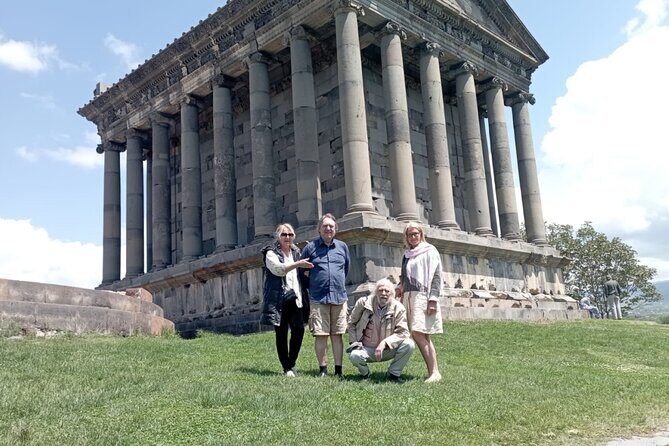
This is the kind of day trip that makes sense if you’re using Yerevan as your base. You’re out long enough to see major highlights, but not so long that you feel wrecked afterward. The total time is listed at about 6 hours, and the itinerary is built around short, focused stops.
What makes this route especially practical is the mix: you get a pagan temple (Garni), a Christian cave monastery (Geghard), and a volcanic stone wonder (Symphony of Stones). That variety keeps the day from feeling like a checklist. And because it’s private, you can slow down when something catches your eye—columns, carvings, light on the rock—without worrying about the next person in line.
Another value factor is how the day is handled. Hotel pickup and drop-off removes the biggest pain of day trips outside the city. Bottled water is included, so you’re not searching for a shop right when you want to stay comfortable.
One small thing to keep in mind: the tour has a moderate physical fitness requirement. That doesn’t mean it’s an extreme hike, but you should be ready for walking on uneven outdoor ground—especially around the stone formation.
Other Garni and Geghard tours we have reviewed in Yerevan

Garni Temple: Armenia’s preserved 1st-century pagan center
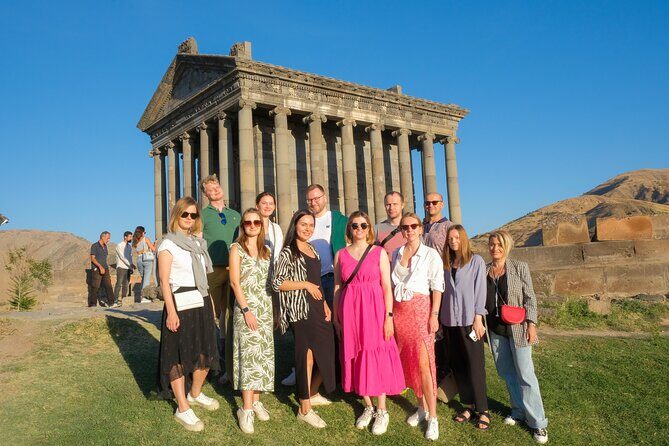
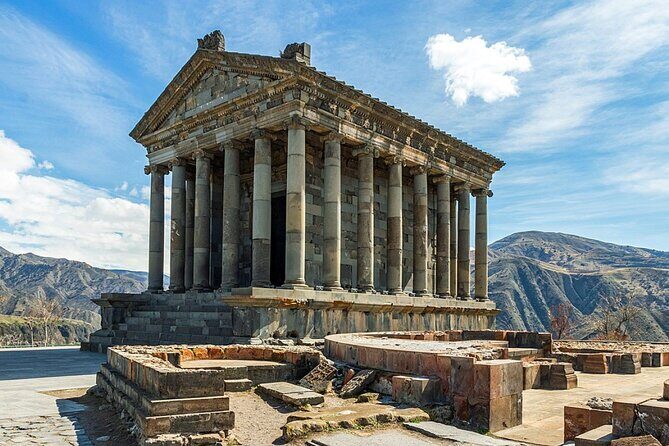
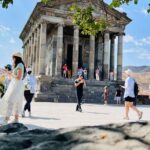
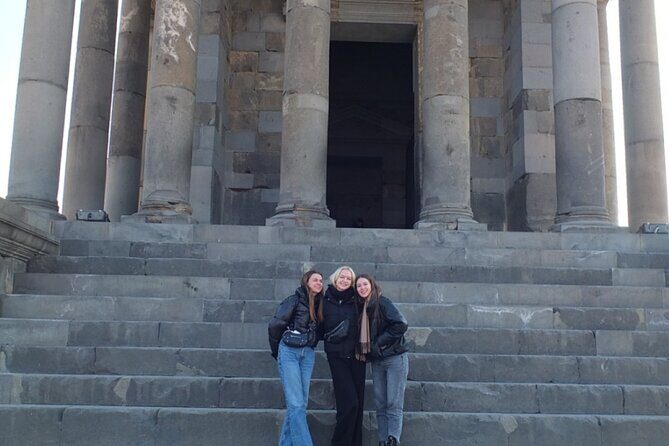
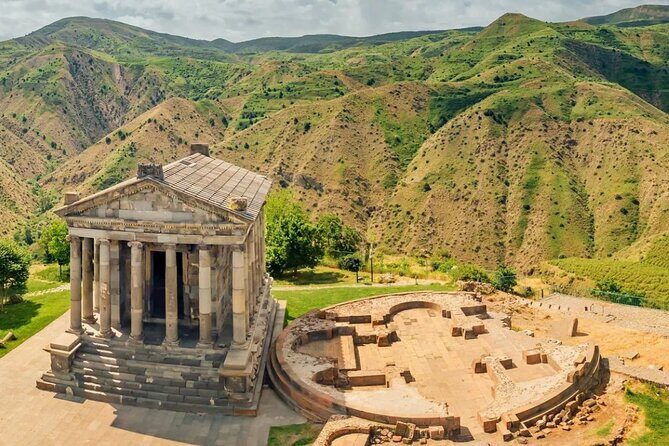
Garni Temple is the main reason many people choose this half-day tour. It’s the only pagan temple preserved on Armenia’s territory, built in the second half of the 1st century by King Trdat III. Later, after Christianity spread, it became a summer residence for Khosrovadukht, Trdat III’s sister.
It’s also UNESCO-listed, so you’re looking at something that’s not only old but protected and recognized. The temple’s story has drama built in: it was destroyed by an earthquake in 1679, leaving fragments and fallen stones scattered around the site. Even if you don’t read a single sign, the setting shows you how real ruins look in the world—not as museum props.
Dedicated to the sun god Mithra is one of the key ideas connected to the temple. You’ll likely hear this kind of interpretation from your guide, and it helps you see why Garni matters beyond the fact that it survived. In other words: this isn’t just a pretty ruin. It’s a living clue to how beliefs shifted in Armenia over centuries.
Time-wise, you’re allocated about 1 hour at Garni. That’s enough to walk around, take photos, and learn the main points without rushing. The practical drawback: the Garni Temple entrance fee is not included, so budget for it separately on the day.
Charents Arch: Ararat views from a platform inside the monument
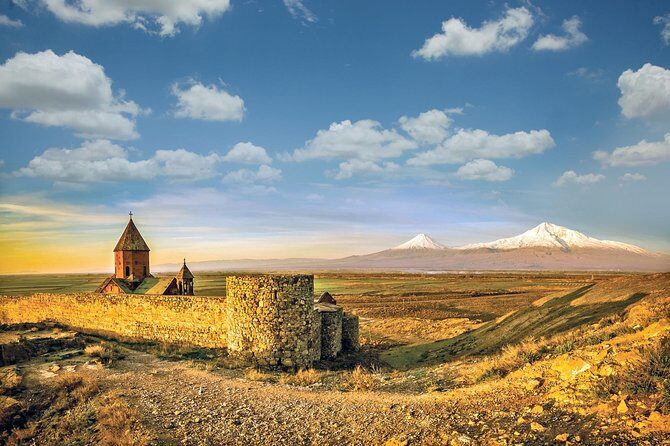
Between Garni and Geghard, you’ll stop at Charents Arch, near Yerevan in the village area of Vokhchaberd. From the outside, it doesn’t look like much—just another arch in the hills. The trick is what happens when you step inside and move onto the platform.
That inner platform is where the viewpoint changes everything. The arch frames a strong sightline toward Mount Ararat, and the feeling is more intentional than a random roadside photo stop. It’s also a quick break in the day: you get about 30 minutes, which is perfect if you want a view without stretching the schedule.
Good news here: the Charents Arch admission is free. So you can treat it like a palate cleanser between the temple ruins and the cave monastery.
A small consideration: because this is a viewpoint, your enjoyment depends on weather and visibility. If clouds roll in, you’ll still get the dramatic structure and a nice pause, but the Ararat view may be softer.
Geghard Monastery in a cave: the spear story and the quiet cool inside
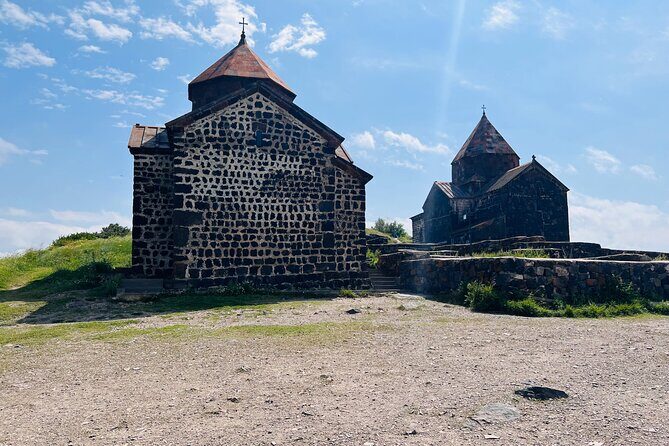
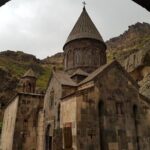
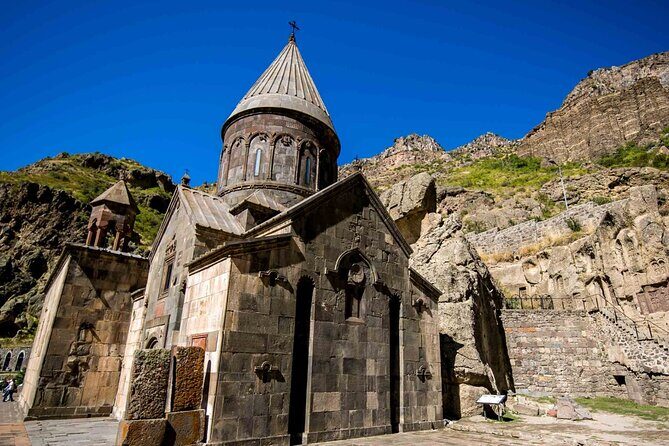
If Garni is the sudden shock of history, Geghard Monastery is the slow, atmospheric one. Geghard is carved out in a cave—often described as a “cave monastery”—and it’s UNESCO-listed as well. The monastery complex was founded in the 4th century AD on the location of a sacred spring that originates from the cave.
Even before the details, the architecture does the teaching. Stonework wraps around you, and the interior feels cool and sheltered. That shift in temperature and sound is part of the experience, not just a backdrop.
There’s also a story that connects the site to the religious imagination of the region. The name Geghard means spear, and it’s linked to the Langin’n spear—the spear said to have pierced Jesus Christ during the crucifixion. The spear associated with this legend is kept in the museum in Etchmiadzin.
In practice, I like this stop because it doesn’t force you to choose between faith and architecture. If you care about religious history, you’ll get context. If you care about building methods and medieval design, the cave carving will grab your attention anyway. Your guide can connect the carvings, spaces, and symbols into something you can actually picture.
You’ll spend about 1 hour here. That’s a good balance: enough time to see the main cave spaces and take in the atmosphere, without feeling dragged through the whole complex at a museum speed.
Admission is free for Geghard on this tour, which is a nice value boost. If you’re the type who likes to stand quietly for a few minutes somewhere, plan to do it once or twice inside the cave.
Symphony of Stones: Basalt Organ Pipes and the Azat River

This stop is the visual “wow” that makes the day feel like more than a historical drive. The Symphony of Stones sits near the village of Garni in the Kotayk province, and it’s tied to a geological explanation: it’s believed to be the result of the collapse of volcanic rocks.
The key feature is shape. The formation consists of huge, paradoxically symmetric hexagon and pentagon basalt columns, with columns reaching nearly 50 meters high. If that sounds abstract, you’ll understand it when you’re there. The columns hang against gravity in a way that looks engineered, not random. That’s why it’s sometimes called the Basalt Organ Pipes—the shapes and spacing resemble organ pipes.
And here’s the practical detail that makes it feel alive: the Azat River flows through the gorge. So you get sound—burbling water—paired with stone geometry. It’s one of those pairings that turns photos from flat souvenirs into something you can remember.
Your time at Symphony of Stones is about 1 hour, which is enough for walking, viewpoints, and a slower moment to take it in. The tour notes a connection to the nearby Khosrov Forest State Reserve, with an entry possibility from the monument territory. That can be a bonus if you want extra nature time, but the main stop itself stays focused on the columns.
The drawback: the Symphony of Stones entrance fee is not included. Also, this is one of the places where comfort matters—some walking and uneven ground can be part of the experience, so wear shoes that handle outdoors.
The good part is that even if you’re not a geology nerd, this formation is still the kind of thing you can understand in seconds.
Other Symphony of Stones tours we have reviewed in Yerevan



Private guide value: calm pacing, smart reroutes, and English commentary
Private doesn’t just mean quieter. It means you get better use of your time. With only your group in the car, you can ask questions when you have them, not when the schedule allows. And because the tour includes a professional driver plus an English or Russian speaking guide (optional), you’re not stuck guessing what you’re looking at.
The guide makes a difference in how fast you connect dots. In one example from this operator’s tours, Arev combined site facts with local details like wildflowers along the route. That kind of extra commentary turns a “see it” day into a “understand it” day.
Pacing also matters. You’ll likely feel it most at Garni and Geghard, where taking a little extra time changes the photos and your attention. A private setup helps because you don’t get trapped by a large group’s rhythm.
Flexibility is another quiet advantage. One strong piece of real-world guidance: if a road closure affects a planned stop, your guide can handle the situation with alternatives. That’s not something you’ll always need, but it can save your day if the unexpected happens.
Transportation is also part of the experience. The car ride is described as relaxed even when roads are rough, and drivers like David and Abbo have handled bumpy stretches carefully. Add bottled water, and you’re not dealing with basic comfort problems while you’re trying to enjoy old stones.
Price breakdown: what the $85 covers and what you pay on site
The listed price is $85 per group, up to 3 people, which is a big part of the value story. If you’re traveling as a pair or small group, your cost can land well below the per-person level of many larger day-trip arrangements—especially once you count included services.
Here’s what’s clearly included:
- Hotel pickup and drop-off in Yerevan
- A professional driver
- English (or Russian) speaking guide (optional)
- Bottled water
- Admission tickets to attractions visited (with the exceptions noted below)
Here’s what is not included:
- Garni Temple entrance fee
- Symphony of Stones entrance fee
- Lunch and alcoholic beverages
So the real budgeting tip is simple: plan to pay only the two paid-entry sites yourself. Everything else on the tour is listed as free for Charents Arch and Geghard Monastery.
If you’re comparing value, I’d do it this way: you’re paying for private transport, pickup, and guided time across three major UNESCO/natural stops. The paid entrance fees are relatively limited in scope, and you’re also saving the cost and hassle of arranging separate rides.
How to plan your day so it feels relaxed, not rushed
This tour’s half-day format is the foundation of its comfort. About six hours means you can fit it into your Armenia rhythm without turning your day into a blur. I like that the schedule keeps each stop contained: Garni Temple (about 1 hour), Charents Arch (about 30 minutes), Geghard (about 1 hour), and Symphony of Stones (about 1 hour).
To make the most of the day, I’d plan around two practical needs:
- Bring your budget for the on-site tickets at Garni Temple and Symphony of Stones.
- Wear something you can move in comfortably, especially for the stone formation outdoors.
Timing the pickup can also make or break a day trip. This operator’s tours commonly allow you to coordinate pickup time, and that can help if you want to start early or line it up with your lunch plans back in Yerevan. If you’re sensitive to crowds or prefer quieter photo moments, an earlier start is usually smarter for rural viewpoints.
One more planning point: Ararat visibility at Charents Arch depends on weather. If you get a clear view, enjoy it slowly. If visibility is hazy, still take the time—because the structure itself is worth a photo and the viewpoints are part of the design.
Should you book this Garni–Geghard private tour?
Book it if you want a private, half-day mix of Armenia’s spiritual history and dramatic geology, with pickup so your day starts without friction. The best match is a couple or small group (up to 3) who care about learning what they’re seeing and don’t want to get trapped in a fast-moving group schedule.
Skip it only if you’re trying to travel strictly on the cheapest possible ticket-only costs. You will pay entrance fees on site for Garni Temple and Symphony of Stones, and lunch isn’t included. Also, if you hate any outdoor walking at all, the “moderate physical fitness” note is worth taking seriously.
If you’re balancing value, comfort, and three headline stops in one outing, this tour is easy to recommend.
FAQ
Is hotel pickup and drop-off included?
Yes. The tour includes pickup from your hotel (or hostel/apartment) in Yerevan and return drop-off.
How long is the tour?
It’s listed as about 6 hours.
What language is the guide offered in?
The tour offers an English or Russian speaking guide (English is available).
Are the attraction entrance fees included?
Admission tickets are included for the attractions visited, but the Garni Temple entrance fee and the Symphony of Stones entrance fee are not included. Charents Arch and Geghard are free on this route.
Do I need to arrange a ticket or do I get one during the tour?
You’ll have a mobile ticket.
Is lunch included?
No. Lunch is not included.
Can I cancel for a full refund?
Yes. Free cancellation is available if you cancel at least 24 hours before the experience’s start time.